 Inside the Canvas
Painting techniques / Sfumato
Sfumato
Sfumato is a way of painting where tones and colours melt into one another so softly that there are no visible lines or edges.
What the word means
Sfumato comes from the Italian fumo, smoke. Edges fade away like smoke in the air: the corner of a mouth or the shadow under an eye has no hard outline, so the face seems soft, alive and a little mysterious.
How Leonardo did it
- He built forms up with many extremely thin, translucent layers of oil paint.
- Each layer shifted the tone only slightly, so light turned into shadow by tiny steps.
- He blurred outlines on purpose, especially around the eyes and mouth, which is why the Mona Lisa's smile seems to change as you look.
Where to see it
Leonardo da Vinci (1452-1519) is the master of sfumato. The Mona Lisa and the Virgin of the Rocks are the classic examples. Raphael and Leonardo's pupils in Milan, the Leonardeschi, learned the soft blending from him.
Sfumato vs chiaroscuro
Both deal with light and shade. Chiaroscuro is about contrast and solid form. Sfumato is about softness: the change from light to dark is so gradual that you cannot point to where one ends and the other begins.
See it in our collection
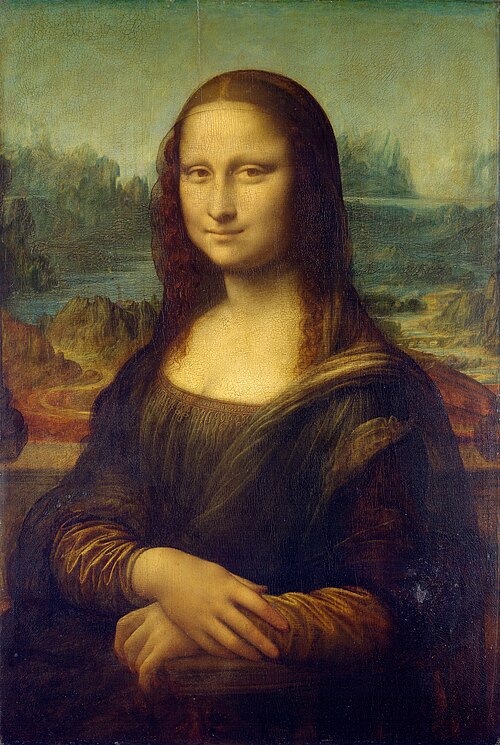 Mona LisaLeonardo da Vinci, 1503
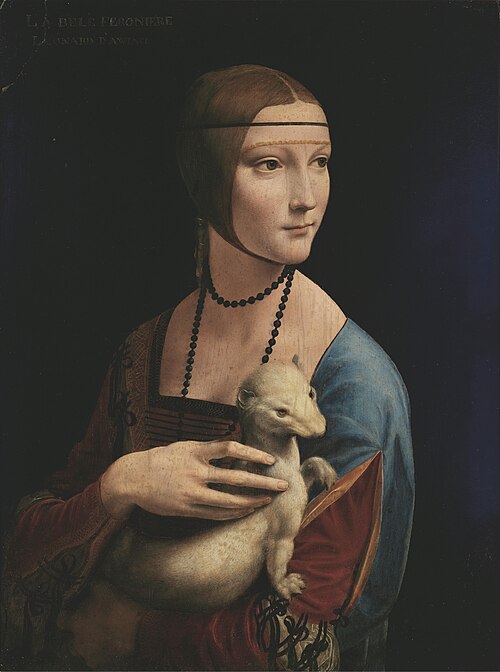 Lady with an ErmineLeonardo da Vinci, 1490
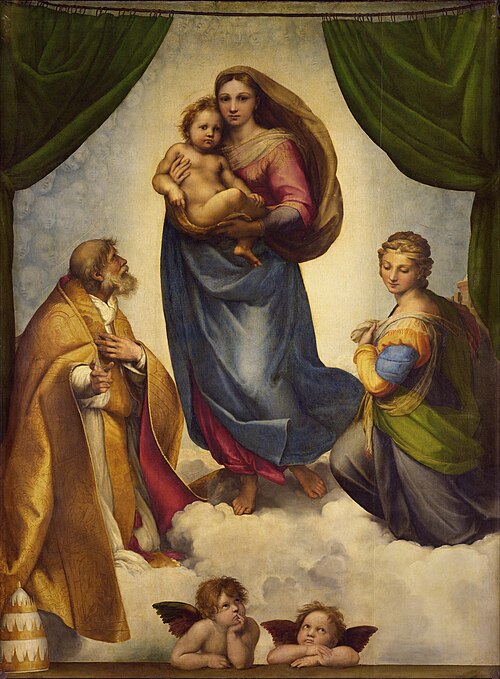 Sistine MadonnaRaphael, 1512
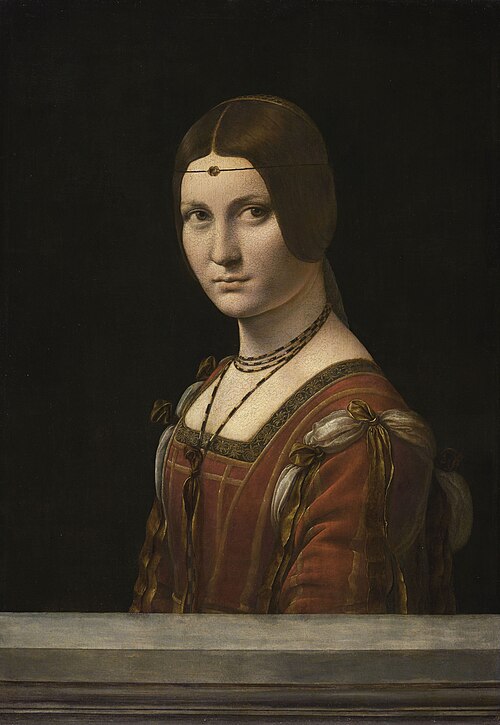 La Belle FerronnièreLeonardo da Vinci, 1495
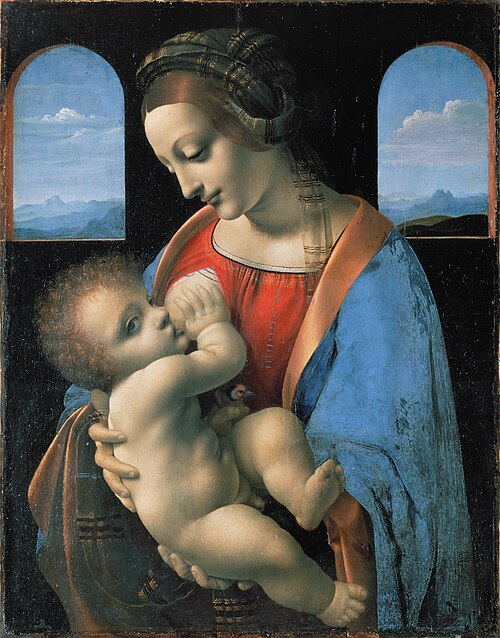 Madonna LittaLeonardo da Vinci, 1490
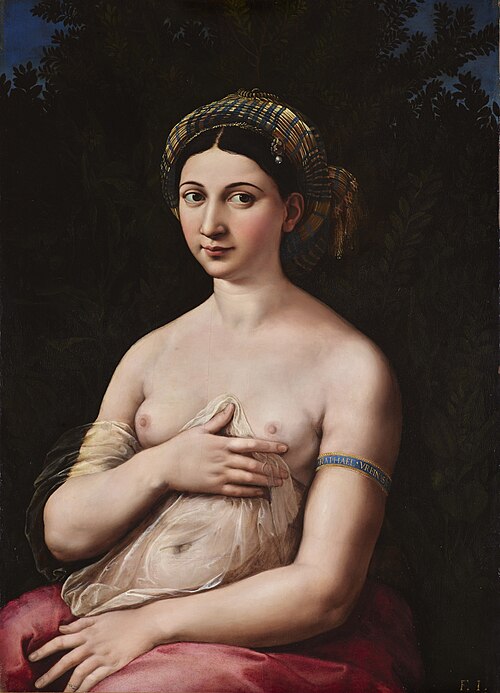 La FornarinaRaphael, 1519
More painting techniques
Sfumato
What is sfumato in art?
Sfumato is a painting technique of very soft, gradual blending between tones, with no hard lines, made famous by Leonardo da Vinci.
Which famous painting uses sfumato?
The Mona Lisa is the best-known example, especially around her eyes and smile.
What does sfumato mean?
It comes from the Italian word for smoke, because the edges seem to fade like smoke.
How can I create sfumato?
Work in thin, translucent layers, change the tone only a little each time, and soften edges with a dry, soft brush instead of drawing lines.