Inside the Canvas
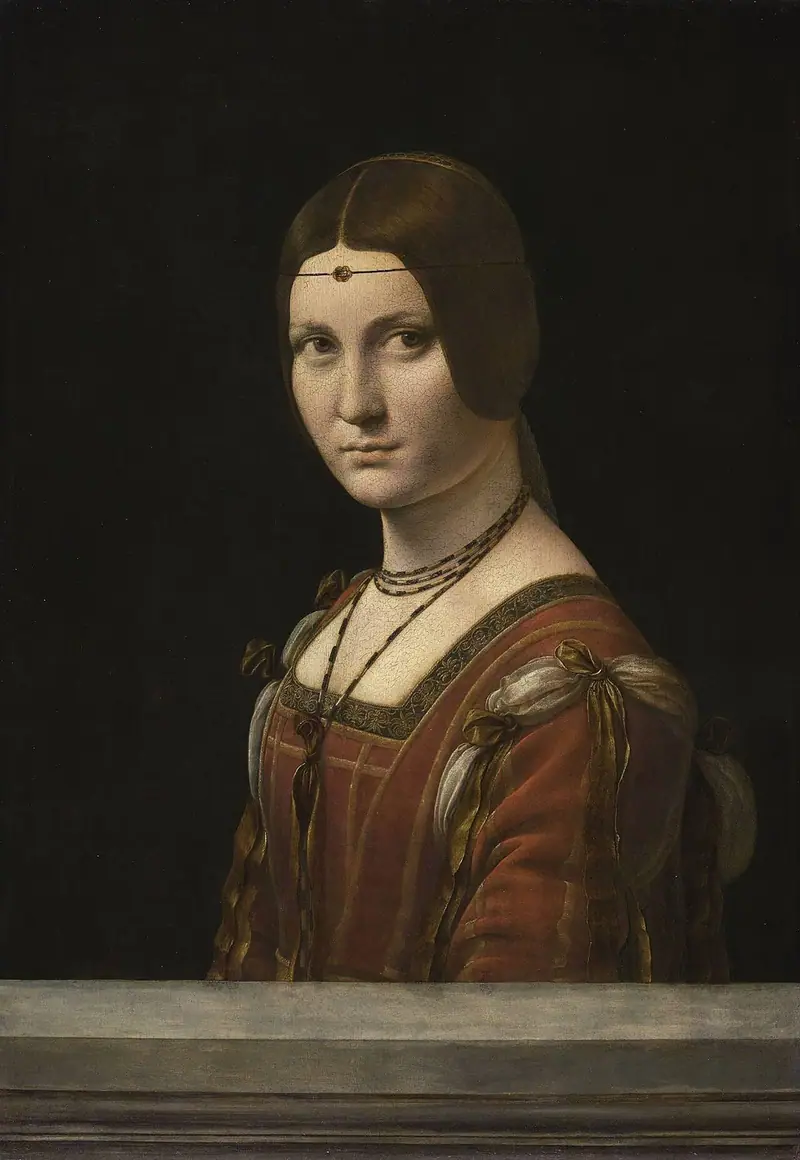
Tip: move over the painting to use the lens.
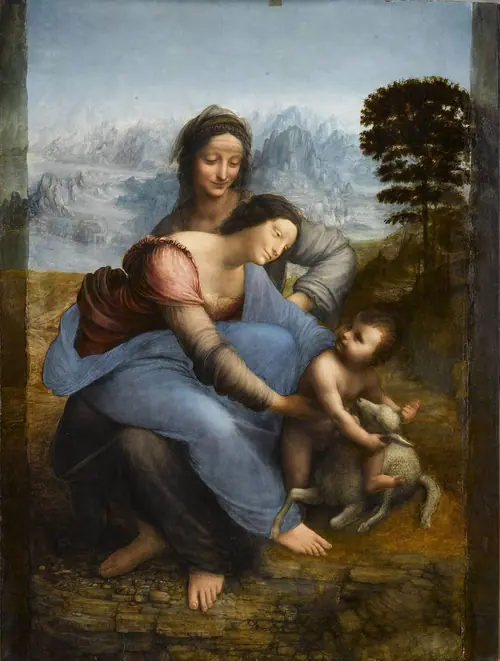
La Belle Ferronnière
Leonardo da Vinci · 1495
A Renaissance enigma: What secrets lie behind this captivating portrait?
- Artist
- Leonardo da Vinci
- Date
- 1495
- Where to see it
- Louvre
Louvre · Public domain · image via Wikimedia Commons · see it at the museum ↗
Updated 13 October 2026 · how we write
The story
Leonardo da Vinci's La Belle Ferronnière is a 15th-century portrait painting that has piqued the curiosity of art enthusiasts for centuries. The artwork is a representation of a lady, whose identity remains unknown to this day.
Leonardo da Vinci, a true Renaissance man, was an Italian artist, inventor, and scientist who is widely regarded as one of the greatest painters of all time. His works continue to inspire and fascinate us to this day.
Our perspective
Our own reading of the picture - an opinion, not a fact.
Standing in front of La Belle Ferronnière, I'm struck by the way Leonardo da Vinci's brushstrokes seem to dance across the canvas, weaving together a tapestry of emotions and intrigue. It's as if the painting is asking us to ponder the secrets that lie behind the subject's enigmatic smile.
In today's fast-paced world, La Belle Ferronnière is a powerful reminder of the importance of slowing down and appreciating the beauty in the world around us. The painting invites us to pause and reflect on the mysteries that surround us.
Slow Look
- The subject's eyes Notice the subtle sparkle in her gaze, which seems to hold a world of secrets.
- The lady's dress Observe the intricate folds and textures of her clothing, which seem to convey a sense of elegance and refinement.
- The background Look beyond the subject and take in the subtle nuances of the background, which seem to fade into the distance like a gentle mist.
- The brushstrokes Marvel at the masterful brushstrokes that bring the subject to life, each stroke a testament to Leonardo da Vinci's skill and artistry.
- The subject's hands Notice the delicate folds of the subject's hands, which seem to convey a sense of gentleness and vulnerability.
About Leonardo da Vinci
Leonardo da Vinci (1452-1519) was born near the Tuscan town of Vinci and trained in Florence in the workshop of Andrea del Verrocchio. He worked for patrons in Florence, Milan and Rome, painting The Last Supper in Milan in the 1490s and the Mona Lisa from around 1503. Fewer than 20 paintings are accepted as his, but his soft sfumato blending changed portrait painting. His notebooks fill thousands of pages with studies of anatomy, machines, water and flight. He spent his last years in France, where he died at Amboise in 1519.
Questions about La Belle Ferronnière
What is the story behind La Belle Ferronnière?
Leonardo da Vinci's La Belle Ferronnière is a 15th-century portrait painting that has piqued the curiosity of art enthusiasts for centuries. The artwork is a representation of a lady, whose identity remains unknown to this day.
Who painted La Belle Ferronnière?
Leonardo da Vinci painted La Belle Ferronnière.
When was La Belle Ferronnière painted?
La Belle Ferronnière is dated 1495.
Where can I see La Belle Ferronnière?
It is in the collection of Louvre.
Do Leonardo's notebooks mention La Belle Ferronnière?
Not directly. The notebooks do not describe this portrait, and the sitter's identity is still debated (Lucrezia Crivelli is often suggested). They do show the study of light and anatomy that shaped portraits like it.
What is the significance of the subject's dress in La Belle Ferronnière?
She wears a plain red dress with ribboned, laced sleeves in the Milanese court fashion of the 1490s. The thin band across her forehead with a small jewel, called a ferronniere, later gave the painting its name.
Keep reading
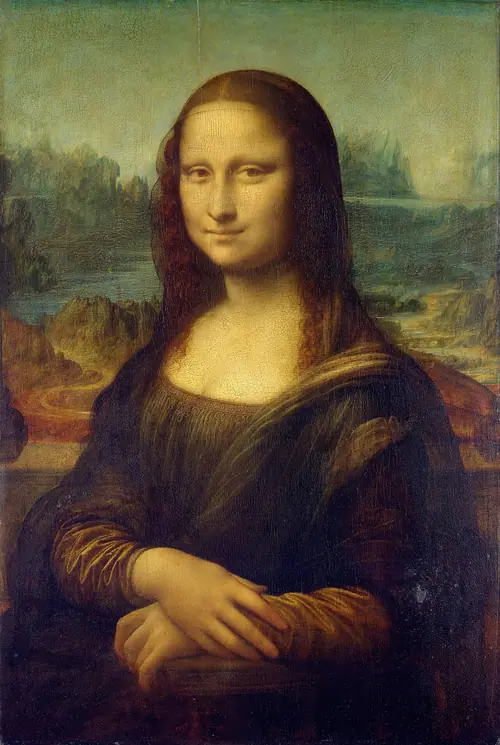
- Mona Lisa Leonardo da VinciAlso by Leonardo da Vinci
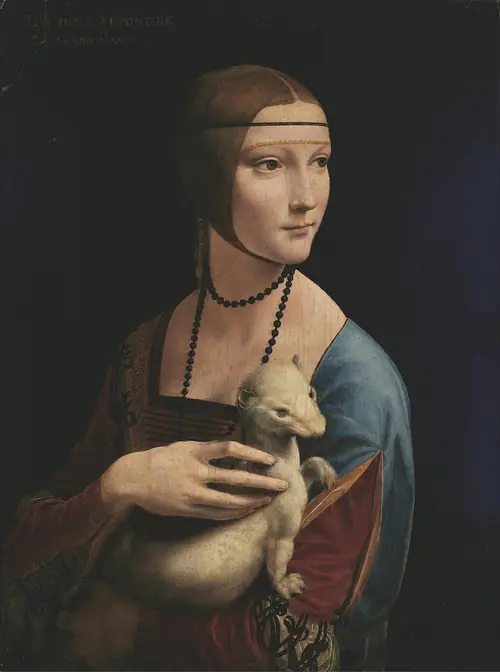
- Lady with an Ermine Leonardo da VinciAlso by Leonardo da Vinci
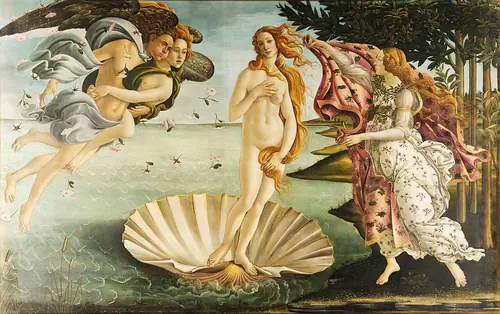
- The Birth of Venus Sandro BotticelliShared themes: elegance, elegant
What do you see?
Stand in front of it for a moment. Then tell us what you noticed or felt - there are no wrong answers.
Be the first to share a thought.
More by Leonardo da Vinci
If you like this, stand in front of these