Inside the Canvas
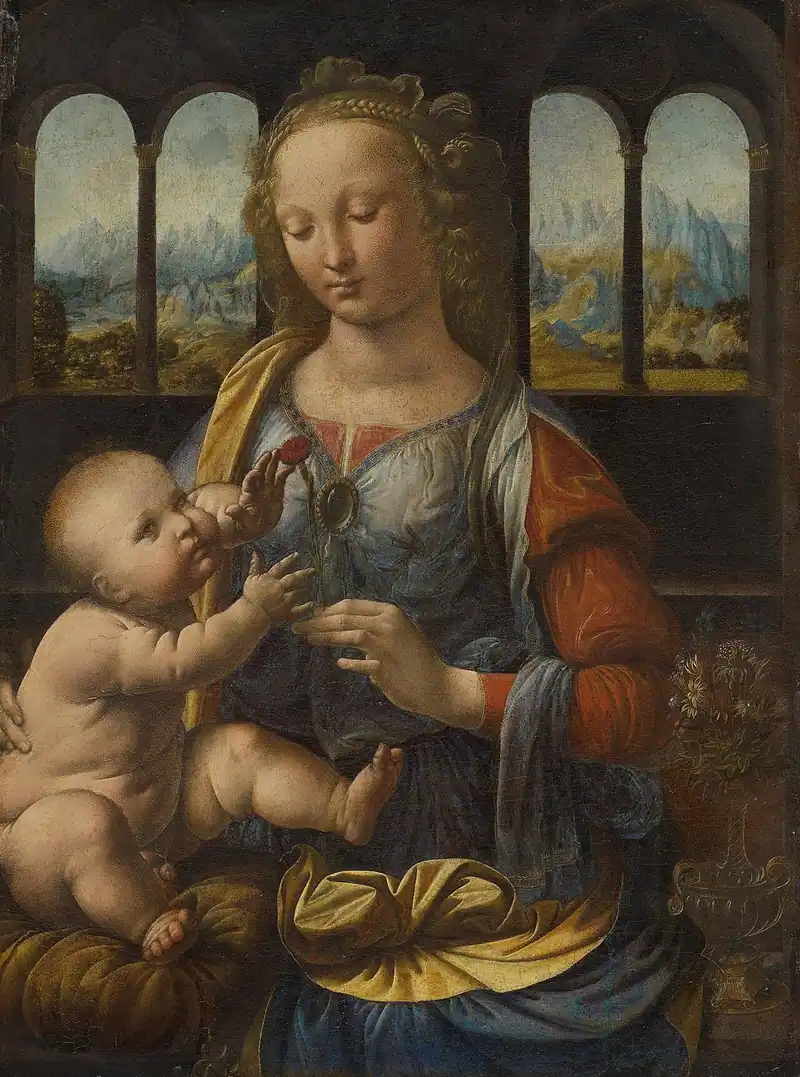
Tip: move over the painting to use the lens.
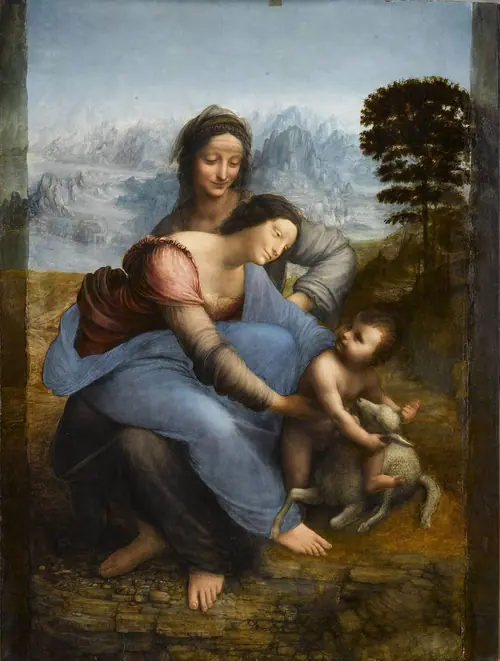
Madonna of the Carnation
Leonardo da Vinci · 1475
Leonardo's Renaissance secret: a mother's gentle touch?
- Artist
- Leonardo da Vinci
- Date
- 1475
- Where to see it
- Bavarian State Painting Collections
Bavarian State Painting Collections · Public domain · image via Wikimedia Commons · see it at the museum ↗
Updated 19 October 2026 · how we write
The story
The Madonna of the Carnation is a tender portrait of a mother and child, painted by Leonardo da Vinci around 1478-1480. This beautiful piece is a prime example of Leonardo's skill as a painter and his ability to capture the essence of his subjects. It showcases his attention to detail and his understanding of human emotions.
The painting is a testament to Leonardo's skill as an artist and his ability to convey the emotions of his subjects. It is a prime example of the Renaissance style, characterized by its use of oil paints and its attention to detail.
Leonardo da Vinci was a true Renaissance man, with a wide range of interests and talents. He was a painter, sculptor, engineer, scientist, and architect, among other things. His notebooks are a treasure trove of information, with notes on topics such as anatomy, astronomy, botany, and more.
Our perspective
Our own reading of the picture - an opinion, not a fact.
As you stand in front of this painting, you can't help but feel a sense of calm and serenity. The gentle touch of the mother's hand on the child's face is a reminder of the importance of human connection. It's a moment that is both intimate and universal, a reminder that even in a chaotic world, there is beauty to be found in the simplest of moments.
This painting is a reminder that sometimes the most beautiful things are the ones that are closest to us. It's a moment that is both ordinary and extraordinary, a reminder that beauty can be found in the everyday moments of life.
Slow Look
- the mother's hands Notice how the mother's hands are placed, gently holding the child's face and vase.
- the child's face Take a closer look at the child's face, notice the peaceful expression and the gentle touch of the mother's hand.
- the background Look at the background of the painting, notice the subtle colors and the way they seem to fade into the distance.
- the vase Notice the delicate vase, notice how it adds to the overall sense of peace and serenity.
- the mother's gaze Look at the mother's gaze, notice how it seems to be gazing off into the distance, lost in thought.
About Leonardo da Vinci
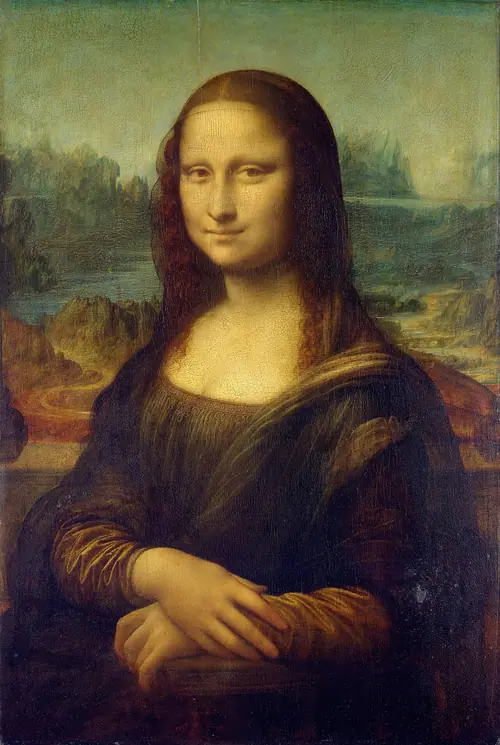
Leonardo da Vinci (1452-1519) was born near the Tuscan town of Vinci and trained in Florence in the workshop of Andrea del Verrocchio. He worked for patrons in Florence, Milan and Rome, painting The Last Supper in Milan in the 1490s and the Mona Lisa from around 1503. Fewer than 20 paintings are accepted as his, but his soft sfumato blending changed portrait painting. His notebooks fill thousands of pages with studies of anatomy, machines, water and flight. He spent his last years in France, where he died at Amboise in 1519.
Questions about Madonna of the Carnation
What is the story behind Madonna of the Carnation?
The Madonna of the Carnation is a tender portrait of a mother and child, painted by Leonardo da Vinci around 1478-1480. This beautiful piece is a prime example of Leonardo's skill as a painter and his ability to capture the essence of his subjects. It showcases his attention to detail and his understanding of human emotions.
Which artist painted Madonna of the Carnation?
The artist of Madonna of the Carnation is Leonardo da Vinci.
What is the date of Madonna of the Carnation?
The museum record dates Madonna of the Carnation to 1475.
Where can I see Madonna of the Carnation?
Madonna of the Carnation is held by Bavarian State Painting Collections.
What is the significance of the mother's hands in the Madonna of the Carnation?
Mary delicately holds a red carnation while the infant Jesus reaches up for it. The flower is often read as a sign of Christ's future Passion, so her gentle gesture carries that meaning.
Keep reading
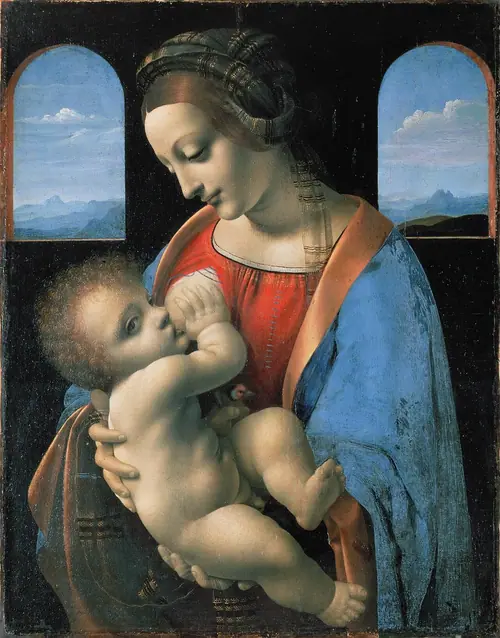
- Madonna Litta Leonardo da VinciAlso by Leonardo da Vinci
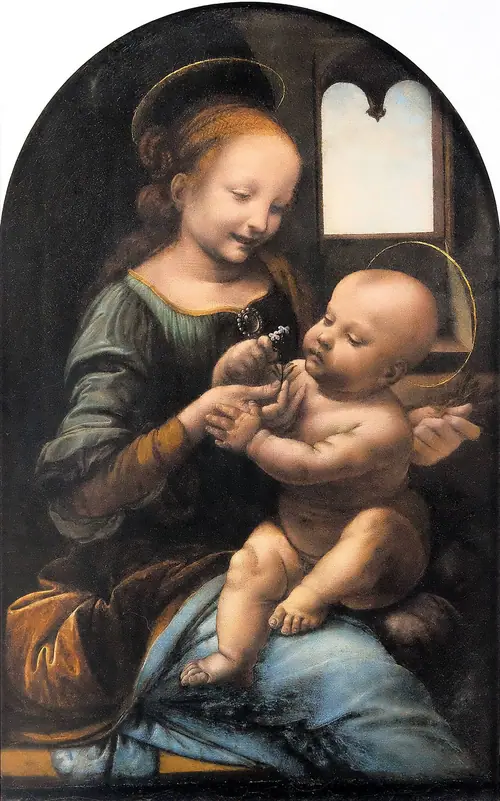
- Benois Madonna Leonardo da VinciAlso by Leonardo da Vinci
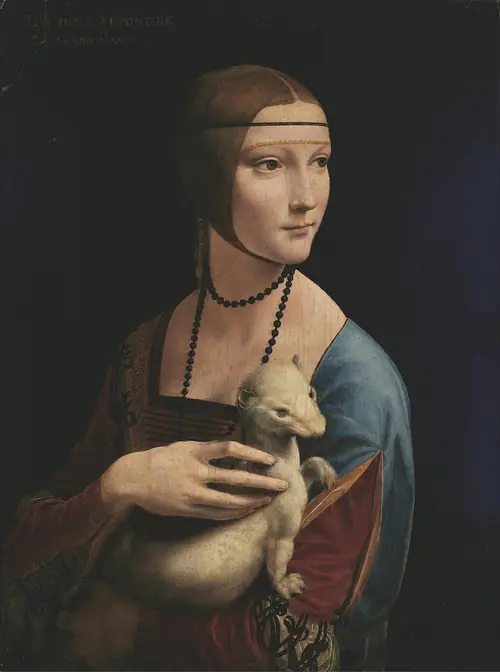
- Lady with an Ermine Leonardo da VinciAlso by Leonardo da Vinci
What do you see?
Stand in front of it for a moment. Then tell us what you noticed or felt - there are no wrong answers.
Be the first to share a thought.
More by Leonardo da Vinci
If you like this, stand in front of these