 Inside the Canvas
Painting techniques / Tempera
Tempera
Tempera is paint made by mixing powdered pigment with a binder, most often egg yolk, and it was the main way to paint pictures in Europe before oil paint took over.
How egg tempera is made
Painters separated an egg yolk, mixed it with a little water and stirred in ground pigment. The paint was applied to wooden panels coated with smooth white gesso, often with gold leaf for haloes and backgrounds.
How it behaves
- It dries in seconds, so colours cannot be blended wet like oil paint.
- Painters built up form with many tiny parallel or cross-hatched strokes.
- The finish is matte and bright, and well-made tempera has lasted for over 700 years.
Tempera in history
From the 1200s to the late 1400s, tempera was the standard medium for altarpieces and panel paintings in Italy. Duccio, Giotto, Fra Filippo Lippi and Botticelli all used it; Botticelli's Birth of Venus is tempera on canvas. During the 1400s and 1500s, oil paint slowly replaced it because oil can be blended and reworked. In the 20th century, artists such as Andrew Wyeth revived egg tempera.
Tempera vs oil paint
Tempera is quick-drying, matte and precise, and suits small strokes and fine detail. Oil paint dries slowly, can be blended smoothly and allows deep glazes and rich darks. Some painters combined both, starting in tempera and finishing in oil.
See it in our collection
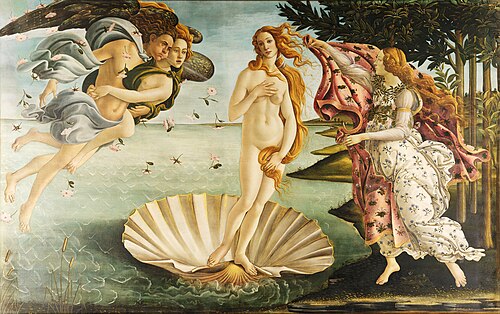 The Birth of Venus
More painting techniques
Tempera
What is tempera paint made of?
Traditional tempera is pigment mixed with a binder, usually egg yolk and a little water.
Is tempera paint still used?
Yes. Egg tempera is still used by some artists and icon painters, and school "tempera" poster paint is a different, modern product.
Why was tempera replaced by oil paint?
Oil paint dries slowly, so artists could blend colours, rework areas and build deep, glowing shadows more easily.
Which famous paintings are tempera?
Botticelli's Birth of Venus, Duccio's Maesta and many Italian altarpieces from the 1200s-1400s are tempera.