 Inside the Canvas
Painting techniques / Chiaroscuro
Chiaroscuro
Chiaroscuro is the use of strong contrasts between light and shade to make figures and objects look solid and three-dimensional.
What the word means
Chiaroscuro is Italian for "light-dark" (chiaro = light, scuro = dark). It describes how a painter grades light into shadow across a face, a fold of cloth or a whole room, so a flat canvas seems to have depth.
How painters build it
- Pick one main light source and keep it consistent.
- Paint the lit side in the lightest values, then step down through half-tones into shadow.
- Keep a little reflected light inside the shadows, so forms stay round instead of flat.
- Use the darkest darks close to the brightest lights where you want the eye to land.
Great examples
Leonardo da Vinci studied light closely and blended it softly. Rembrandt (1606-1669) used warm, glowing light coming out of deep brown shadow in portraits and Bible scenes. Joseph Wright of Derby painted candle-lit scientific scenes, such as An Experiment on a Bird in the Air Pump (1768), where one hidden light makes every face glow.
Chiaroscuro, tenebrism and sfumato
Tenebrism is chiaroscuro pushed to the extreme, with most of the picture in darkness. Sfumato is a softer cousin: tones melt into each other with no hard edges, as in Leonardo's portraits.
See it in our collection
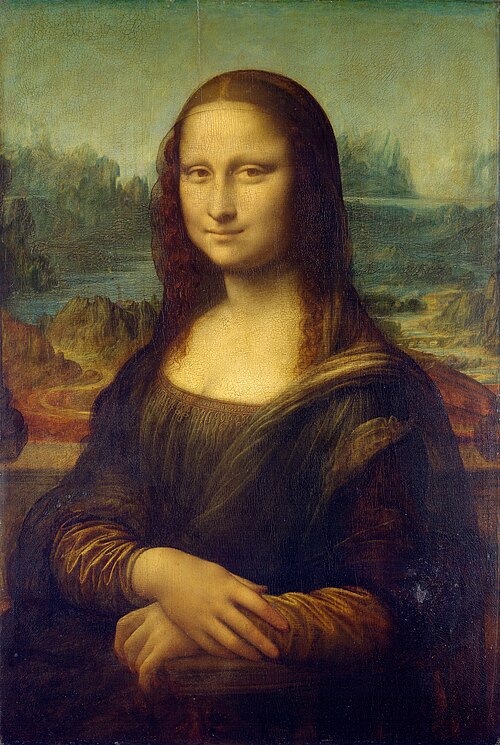 Mona LisaLeonardo da Vinci, 1503
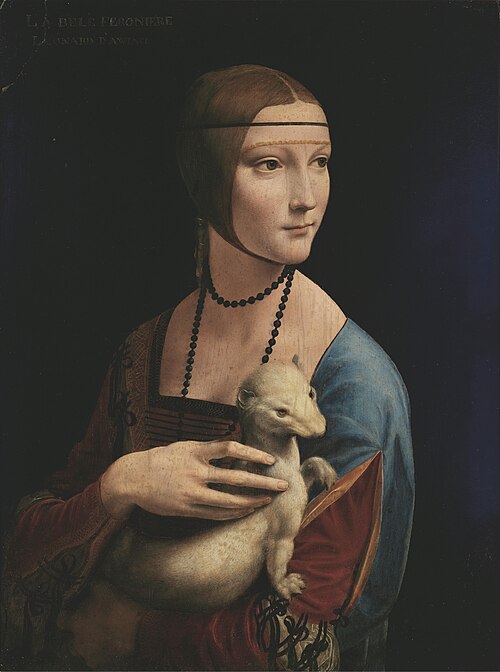 Lady with an ErmineLeonardo da Vinci, 1490
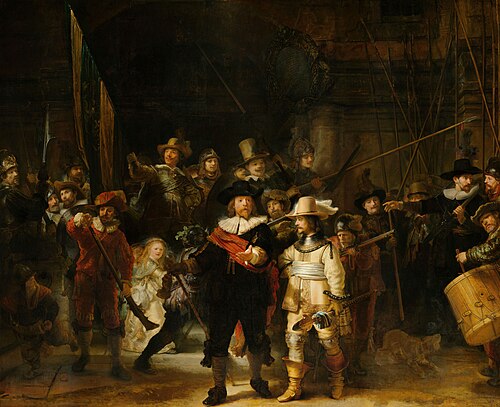 The Night WatchRembrandt, 1642
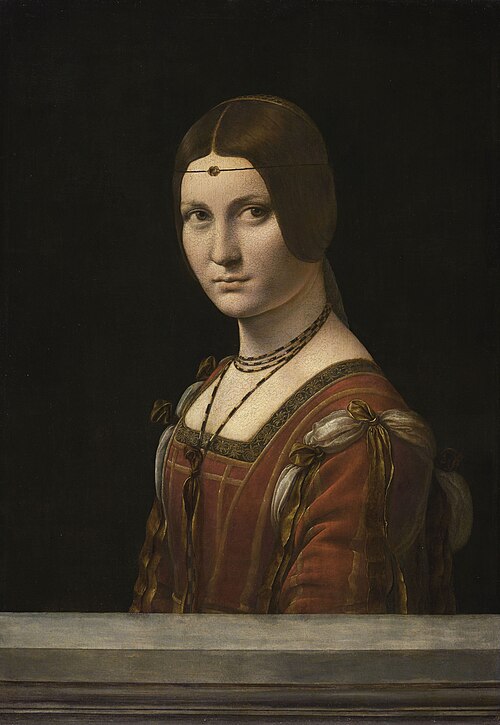 La Belle FerronnièreLeonardo da Vinci, 1495
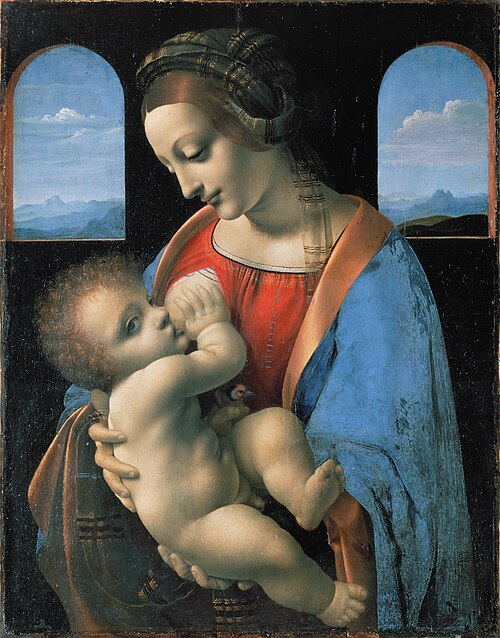 Madonna LittaLeonardo da Vinci, 1490
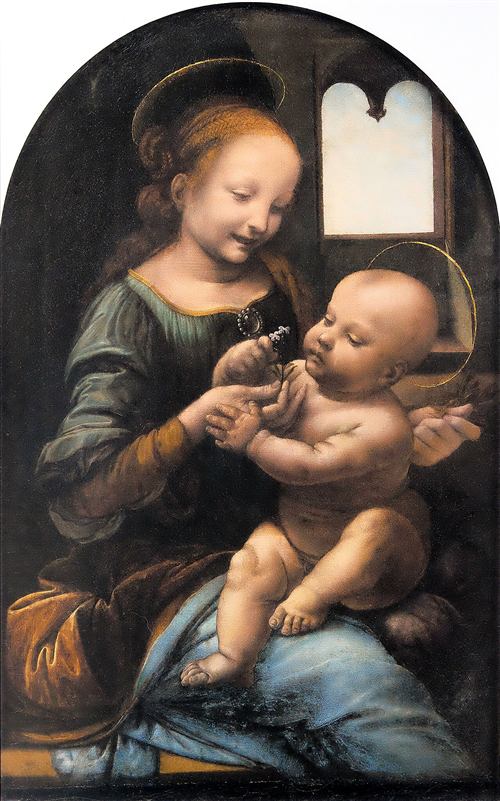 Benois MadonnaLeonardo da Vinci, 1480
More painting techniques
Chiaroscuro
What is chiaroscuro in simple words?
It is the use of light and shadow to make things in a painting or drawing look solid and three-dimensional.
Who is famous for chiaroscuro?
Leonardo da Vinci, Caravaggio, Rembrandt and Joseph Wright of Derby are among the best-known masters of chiaroscuro.
Is chiaroscuro only used in painting?
No. It is used in drawing, printmaking (chiaroscuro woodcuts were made in the 1500s), photography and film lighting too.
How can I practise chiaroscuro?
Light a simple object, such as an egg or a mug, with one lamp in a dark room, then draw or paint only the shapes of light and shadow before adding detail.