Inside the Canvas
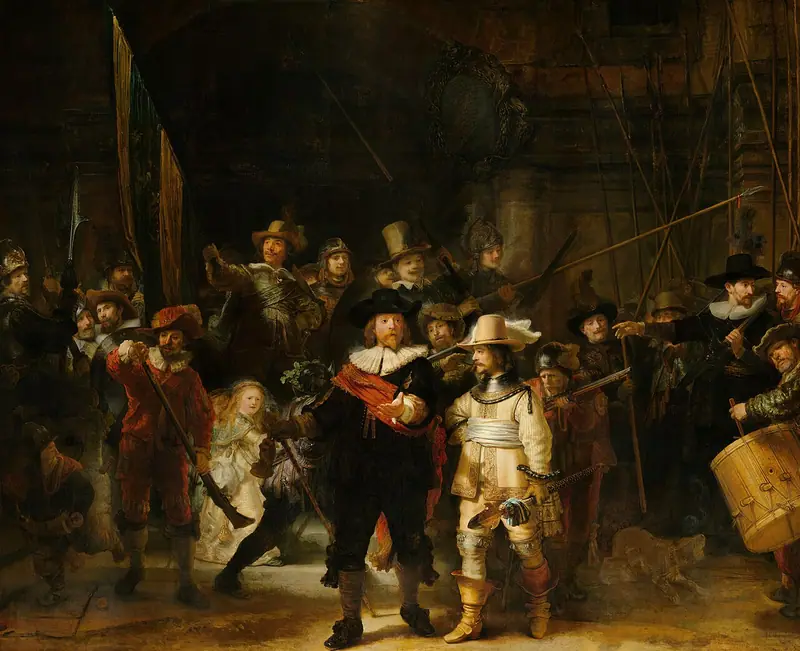
Tip: move over the painting to use the lens.
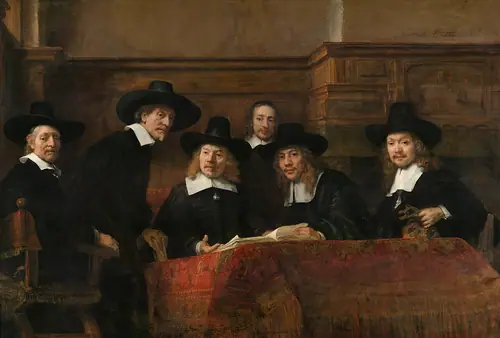
The Night Watch
Rembrandt · 1642
Does a group portrait become a drama when light and shadow collide?
- Artist
- Rembrandt
- Date
- 1642
- Where to see it
- Rijksmuseum
Rijksmuseum · Public domain · image via Wikimedia Commons · see it at the museum ↗
Updated 13 October 2026 · how we write
The story
Rembrandt's massive painting, The Night Watch, is a masterpiece that transforms a group portrait into a captivating drama. It's a scene of action, not a quiet night scene, despite its name.
It's a testament to Rembrandt's skill that he can make a group of people seem so dynamic and full of life.
It's a sight to behold in person, and it's no wonder it's the crown jewel of the Rijksmuseum's collection.
Our perspective
Our own reading of the picture - an opinion, not a fact.
Standing in front of The Night Watch, I feel like I'm part of the scene. The sense of movement and energy is infectious, and it makes me want to be a part of the militia company.
This painting asks me to consider what it means to be part of a group. Is it about individuality or unity? Rembrandt's use of light and shadow creates a sense of tension that keeps me engaged.
The Night Watch is like a time capsule, capturing a moment in Dutch history. It's a reminder that art can be a powerful way to connect with the past and understand our place in it.
Slow Look
- the captain Notice the captain's confident gaze, as if he's leading the charge.
- the light source Take a moment to appreciate the dramatic lighting that creates such depth and dimension.
- the horses Look closely at the horses, and you'll see the tension and energy of the scene.
- the militia members Observe the individual expressions and postures of the militia members, each with their own story to tell.
- the shadow Don't overlook the powerful shadows that add depth and mystery to the scene, hiding secrets and stories.
About Rembrandt
Rembrandt van Rijn (1606-1669) was born in Leiden and moved to Amsterdam in the early 1630s, where he became the city's most sought-after portrait painter. He was a master of light and shadow, as in his group portrait The Night Watch (1642), and a brilliant etcher. Across his life he made dozens of self-portraits that trace his face from confident youth to old age. Despite his fame he ran into money troubles and was declared insolvent in 1656, but he kept working until his death in Amsterdam in 1669.
Questions about The Night Watch
What should I know about The Night Watch?
Rembrandt's massive painting, The Night Watch, is a masterpiece that transforms a group portrait into a captivating drama. It's a scene of action, not a quiet night scene, despite its name.
Which artist painted The Night Watch?
Rembrandt painted The Night Watch.
When did Rembrandt make The Night Watch?
The museum record dates The Night Watch to 1642.
Which museum has The Night Watch?
It is in the collection of Rijksmuseum.
Where is Rembrandt in the Night Watch painting?
Rembrandt is not depicted in the painting.
What is the significance of the shadow in The Night Watch?
The powerful shadows in The Night Watch add depth and dimension to the scene, hiding secrets and stories.
Keep reading
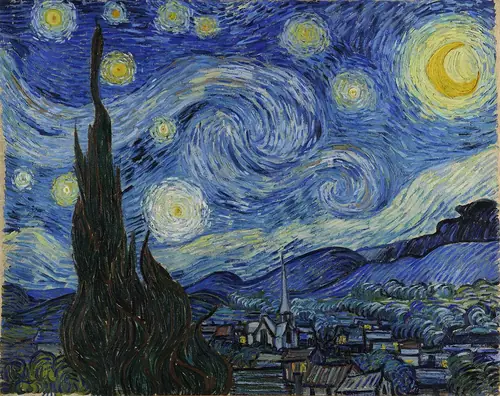
- The Starry Night Vincent van GoghShared themes: drama
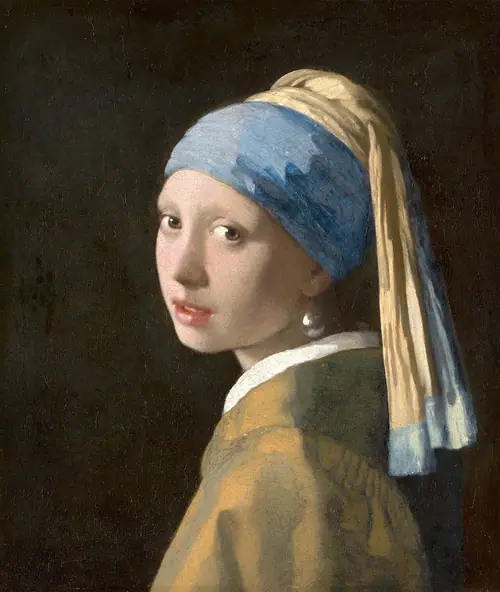
- Girl with a Pearl Earring Johannes VermeerShared themes: dutch golden age
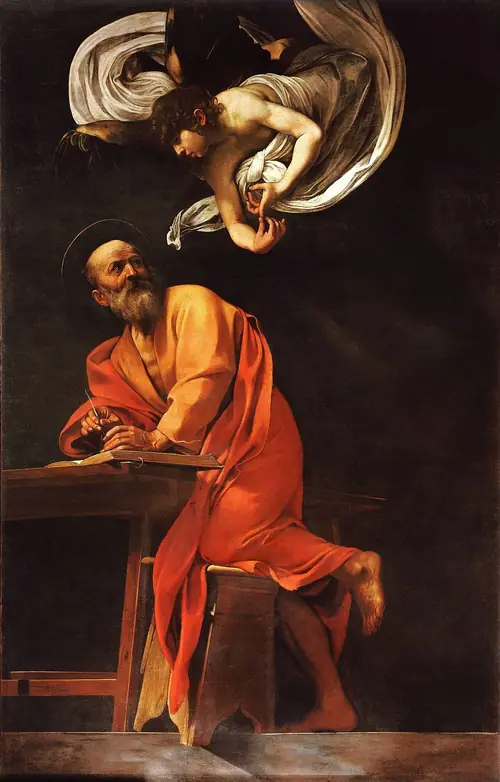
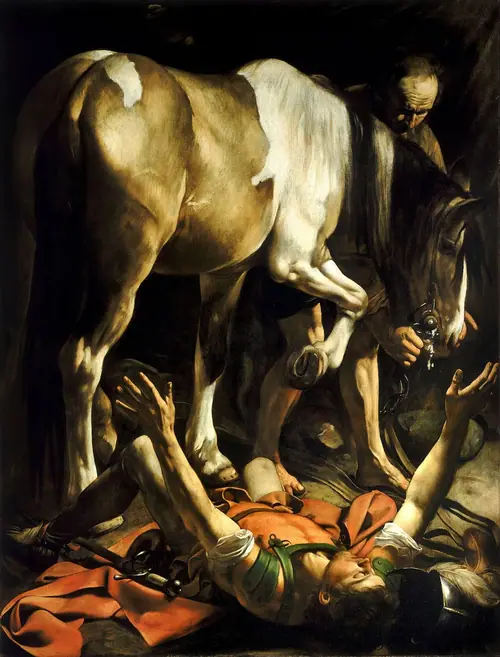
- The Inspiration of Saint Matthew CaravaggioShared themes: dramatic, light, shadow
What do you see?
Stand in front of it for a moment. Then tell us what you noticed or felt - there are no wrong answers.
Be the first to share a thought.
More by Rembrandt
If you like this, stand in front of these