Inside the Canvas
Tip: move over the painting to use the lens.
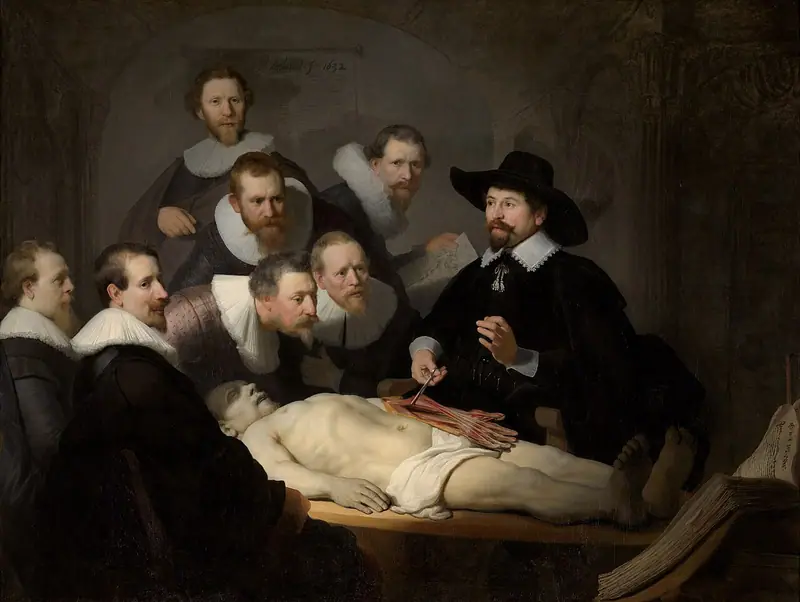
The Anatomy Lesson of Dr. Nicolaes Tulp
Rembrandt · 1632
Is this the original anatomy lesson?
- Artist
- Rembrandt
- Date
- 1632
- Where to see it
- Mauritshuis
Mauritshuis · Public domain · image via Wikimedia Commons · see it at the museum ↗
Updated 13 October 2026 · how we write
Our perspective
Our own reading of the picture - an opinion, not a fact.
As you stand before this painting, you're transported to a moment of intense curiosity, when the boundaries between art and science blurred.
In this era of rapid change, the artist's focus on human anatomy serves as a reminder of the importance of slowing down to understand the intricacies of the human body.
What questions do you ask yourself when confronted with the mysteries of life and death?
Slow Look
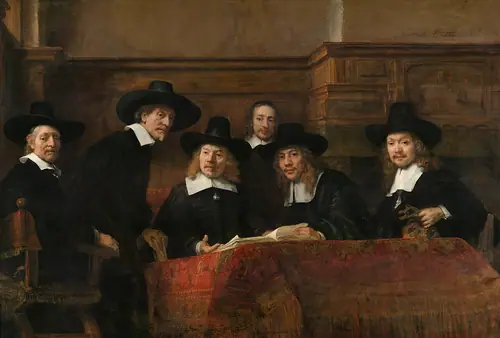
- the surgeon's hands Notice the surgeon's hands, gentle yet firm, as he guides the scalpel.
- the assistants' faces Notice the assistants' faces, a mix of fascination and horror, as they observe the dissection.
- the background figures Notice the background figures, blurred and anonymous, yet part of the larger story.
- the light and shadows Notice how light and shadows dance across the faces, emphasizing the emotions and tensions.
- the doctor's eyes Notice the doctor's eyes, piercing and introspective, as he contemplates the secrets of the human body.
About Rembrandt
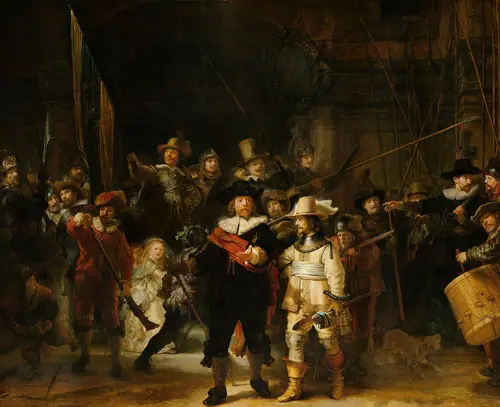
Rembrandt van Rijn (1606-1669) was born in Leiden and moved to Amsterdam in the early 1630s, where he became the city's most sought-after portrait painter. He was a master of light and shadow, as in his group portrait The Night Watch (1642), and a brilliant etcher. Across his life he made dozens of self-portraits that trace his face from confident youth to old age. Despite his fame he ran into money troubles and was declared insolvent in 1656, but he kept working until his death in Amsterdam in 1669.
Keep reading
- The Night Watch RembrandtAlso by Rembrandt
- Girl with a Pearl Earring Johannes VermeerAlso at Mauritshuis
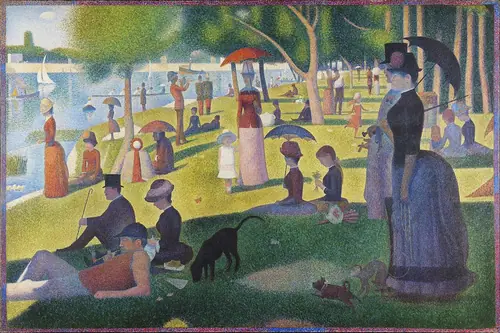
- A Sunday Afternoon on the Island of La Grande Jatte Georges SeuratShared themes: art
What do you see?
Stand in front of it for a moment. Then tell us what you noticed or felt - there are no wrong answers.
Be the first to share a thought.
More by Rembrandt
If you like this, stand in front of these