 Inside the Canvas
Painting techniques / Impasto
Impasto
Impasto is paint put on so thickly that the brush or knife marks stand up from the surface and catch the light.
What the word means
Impasto is Italian for "dough" or "paste". Instead of thin, smooth layers, the painter loads the brush or a palette knife and leaves the paint in ridges and peaks you could almost touch.
Why painters use it
- Real texture: thick strokes cast tiny shadows and catch real light, so highlights look brighter.
- Energy: the direction of each stroke stays visible and shows the painter's movement.
- Emphasis: a few thick touches on a mostly smooth picture pull the eye to a face, a jewel or a highlight.
Masters of impasto
Late Titian and Rembrandt built up glowing highlights in thick paint. Vincent van Gogh made impasto his signature in the late 1880s: in his paintings the sky, fields and flowers are all made of thick, directional strokes.
How to try impasto
- Use oil paint or heavy-body acrylic straight from the tube, with little or no medium.
- Apply it with a stiff brush or a palette knife and avoid over-mixing on the canvas.
- Work on a rigid support, such as a canvas board or panel, and allow extra drying time: thick oil paint can take weeks to dry through.
See it in our collection
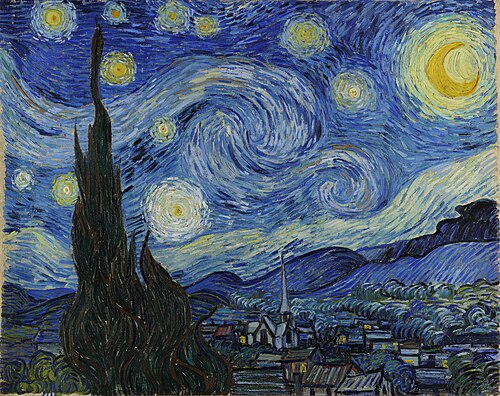 The Starry NightVincent van Gogh, 1889
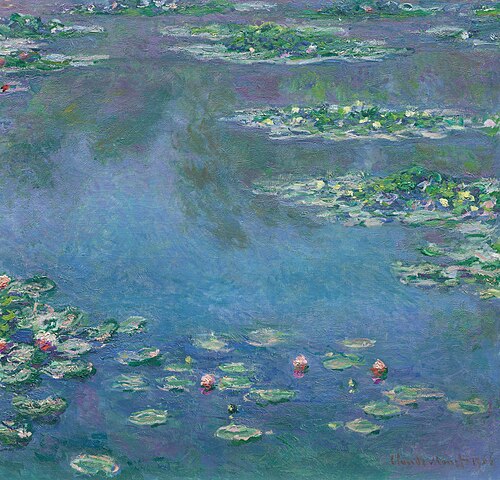 Water LiliesClaude Monet, 1906
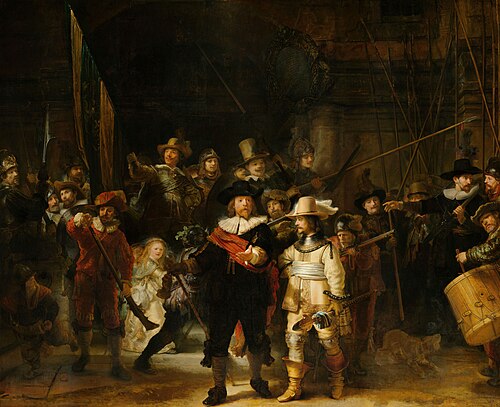 The Night WatchRembrandt, 1642
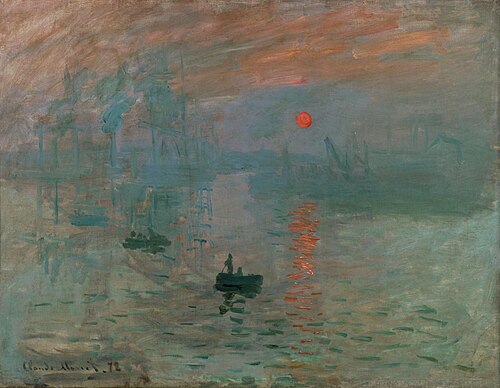 Impression, SunriseClaude Monet, 1872
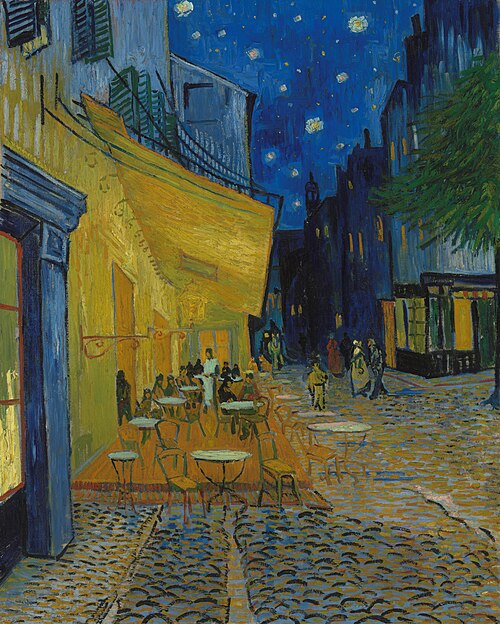 Café Terrace at NightVincent van Gogh, 1888
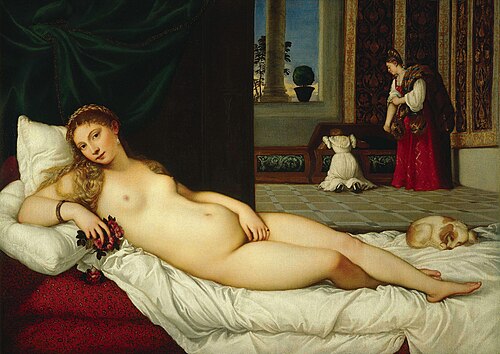 Venus of UrbinoTitian, 1538
More painting techniques
Impasto
What is impasto in art?
Impasto is a technique where paint is laid on so thickly that brush or knife marks stay visible and stand out from the surface.
Which artist is famous for impasto?
Vincent van Gogh is the best-known example. Rembrandt and late Titian also used thick paint for highlights.
Can you do impasto with acrylics?
Yes. Use heavy-body acrylics or add an impasto gel medium, which thickens the paint and helps it hold peaks.
How long does impasto oil paint take to dry?
Thick oil paint can take from several days to several weeks to dry through, depending on how thick it is.