 Inside the Canvas
Painting techniques / Tenebrism
Tenebrism
Tenebrism is a painting style in which most of the picture sinks into deep darkness and the figures leap out in a sharp, spotlight-like beam.
Where the name comes from
The word comes from the Italian tenebroso, meaning dark or gloomy. Art historians use it for pictures where darkness is not just shadow but the main setting: walls, rooms and backgrounds vanish, and only what the painter wants you to see is lit.
How tenebrism works
- A single strong light, usually falling from high up on one side, hits faces, hands and a few objects.
- Everything else drops into near-black, so the edges between light and dark are hard and sudden.
- The effect feels like a stage: the viewer is pulled straight to the action, often at its most dramatic moment.
Caravaggio and his followers
Caravaggio (1571-1610) made the style famous in Rome around 1600, with works such as The Calling of Saint Matthew. Painters across Europe copied him. They were called the Caravaggisti and included Artemisia Gentileschi in Italy, Jusepe de Ribera and Francisco de Zurbaran in Spain, and Gerrit van Honthorst in the Netherlands. Georges de La Tour in France took it further, with scenes lit by a single candle.
Tenebrism vs chiaroscuro
Chiaroscuro is the broad idea of using light and shade to make forms look solid. Tenebrism is an extreme kind of chiaroscuro: the dark areas take over most of the canvas and the contrast is pushed as far as it will go. Every tenebrist painting uses chiaroscuro, but not every chiaroscuro painting is tenebrist.
See it in our collection
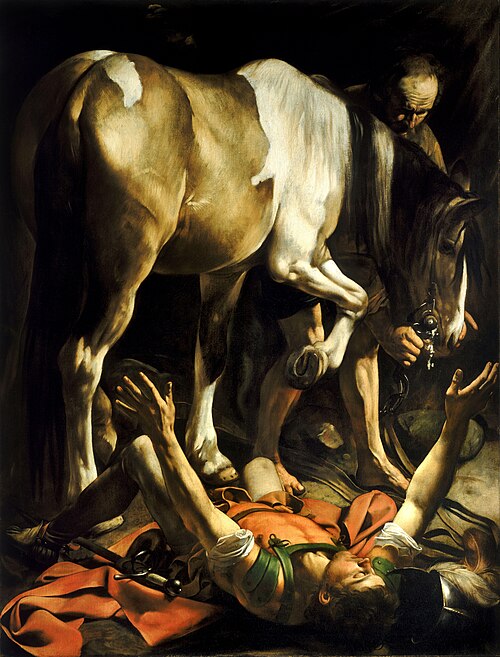 Conversion on the Way to DamascusCaravaggio, 1600
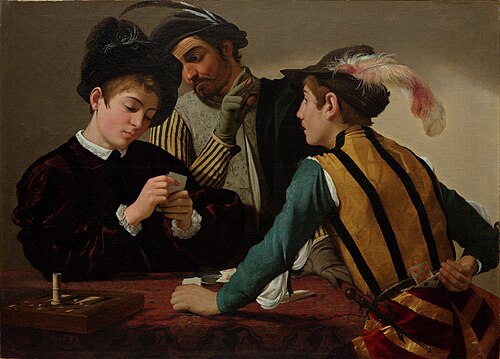 The CardsharpsCaravaggio, 1596
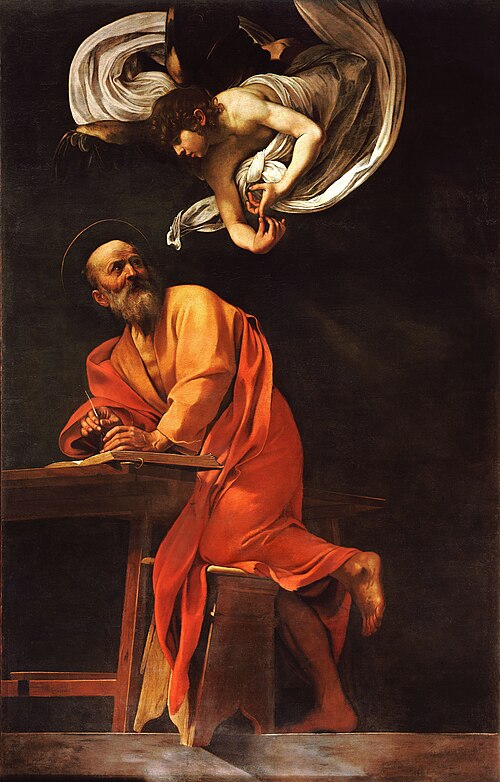 The Inspiration of Saint MatthewCaravaggio, 1602
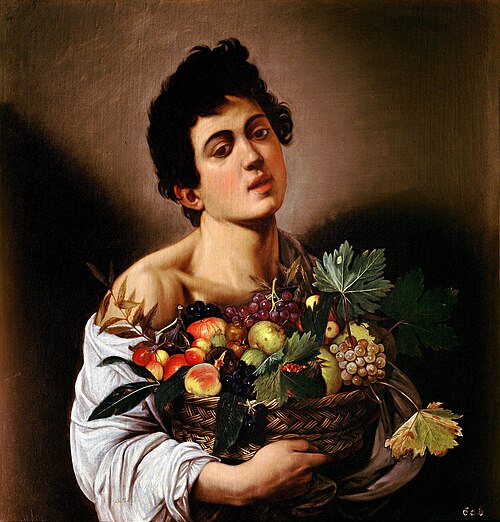 Boy with a Basket of FruitCaravaggio, 1594
More painting techniques
Tenebrism
What is tenebrism in art?
Tenebrism is a style of painting where most of the picture is very dark and a few figures are lit by a strong, focused light, like a spotlight. Caravaggio made it famous around 1600.
What is the difference between tenebrism and chiaroscuro?
Chiaroscuro means using light and shade to model forms. Tenebrism is an extreme form of it, where deep darkness covers most of the canvas and the light is sharp and dramatic.
Who used tenebrism?
Caravaggio, and the painters who followed him, such as Artemisia Gentileschi, Jusepe de Ribera, Francisco de Zurbaran, Gerrit van Honthorst and Georges de La Tour.
Is tenebrism Baroque?
Yes. Tenebrism is closely linked with early Baroque painting in the 1600s, when artists wanted strong drama and emotion.