Inside the Canvas
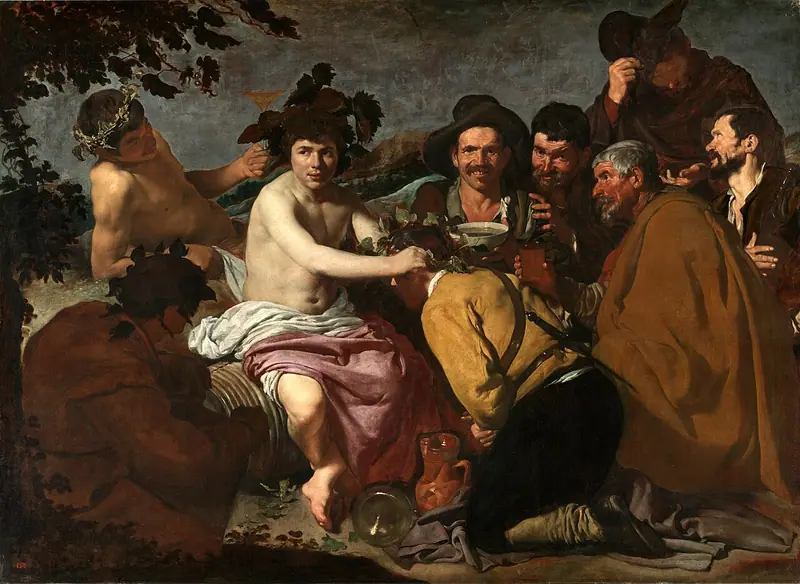
Tip: move over the painting to use the lens.
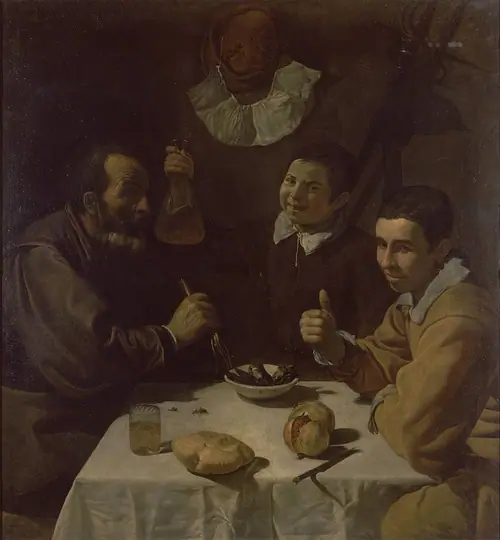
The Triumph of Bacchus
Diego Velázquez · 1628
Meet the intoxicating world of Velázquez's Bacchus
- Artist
- Diego Velázquez
- Date
- 1628
- Where to see it
- Museo del Prado
Museo del Prado · Public domain · image via Wikimedia Commons · see it at the museum ↗
Updated 26 October 2026 · how we write
The story
Imagine stepping into a lively tavern, where revelers are celebrating the god of wine and ecstasy, Bacchus. Diego Velázquez's 'The Triumph of Bacchus' transports us to a vibrant scene, where the god of wine is being honored with a grand procession. The painting is a masterpiece of Spanish Baroque art, showcasing Velázquez's skill in capturing the energy and joy of this ancient mythological figure.
In 1628, Velázquez created this masterpiece, which is now part of the esteemed Museo del Prado in Madrid. The painting is a testament to Velázquez's role as the leading artist in the Spanish court, where he was commissioned to create works that celebrated the country's rich cultural heritage.
Velázquez's use of color and composition creates a sense of movement and celebration, drawing the viewer into the world of Bacchus. The painting is a window into the Spanish Golden Age, a time of great artistic and cultural achievement.
This painting is not just a depiction of a mythological scene, but also a reflection of the values and attitudes of Velázquez's time. It's a reminder of the power of art to capture the essence of a moment and the world around us.
This masterpiece is a product of Velázquez's innovative style, which blended classical techniques with a deep understanding of human nature. The painting is a testament to the artist's skill and creativity, and its enduring appeal is a testament to its timeless beauty.
The subjects of this painting are the revelers, the musicians, and the animals, all celebrating the god of wine. The colors used are bold and vibrant, with a focus on reds, oranges, and yellows to evoke the feeling of warmth and joy.
The style of this painting is Baroque, characterized by dramatic lighting, intense emotions, and a sense of movement. The painting is a masterpiece of Spanish Baroque art, showcasing Velázquez's skill in capturing the energy and joy of this ancient mythological figure.
The place where this painting is displayed is the Museo del Prado in Madrid, a world-renowned museum that is home to many of the world's most famous artworks.
Velázquez's 'The Triumph of Bacchus' is a painting that asks us to slow down and appreciate the beauty and joy that it has to offer. It's a reminder of the power of art to capture the essence of a moment and the world around us.
Our perspective
Our own reading of the picture - an opinion, not a fact.
As we stand in front of 'The Triumph of Bacchus', we are transported to a world of intoxicating joy and celebration. The painting is a reflection of the values and attitudes of Velázquez's time, and it asks us to consider what we can learn from this moment in history.
This painting is a reminder of the power of art to capture the essence of a moment and the world around us. It's a testament to the enduring appeal of Velázquez's work, and it invites us to slow down and appreciate the beauty and joy that it has to offer.
Slow Look
- The musicians in the center Notice how their instruments seem to come alive in their hands.
- The animals in the procession Observe how they seem to be enjoying the celebration as much as the humans.
- The god Bacchus himself Take a moment to appreciate the regal presence of the god, surrounded by the trappings of his power.
- The colors used Notice how the bold colors seem to pop off the canvas, drawing the viewer's eye to the center of the painting.
- The details in the background Take a closer look at the subtle details in the background, such as the architecture and the clothing of the onlookers.
About Diego Velázquez
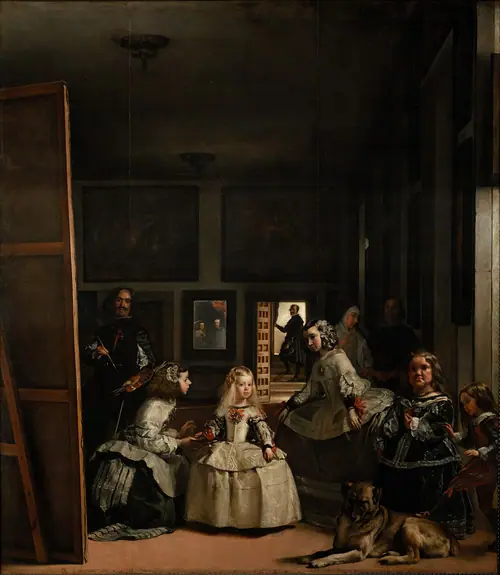
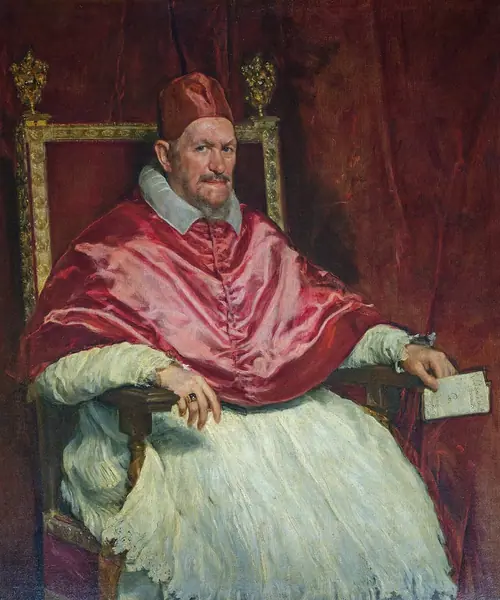
Diego Velazquez (1599-1660) was born in Seville and became court painter to King Philip IV of Spain in 1623, a post he held for the rest of his life. He painted the royal family, courtiers and ordinary people with the same direct, loose brushwork. On a trip to Rome he painted a celebrated portrait of Pope Innocent X (1650). His Las Meninas (1656), now in the Prado, is one of the most studied paintings in the world. Edouard Manet later called him the painter of painters.
Questions about The Triumph of Bacchus
What is known about The Triumph of Bacchus by Diego Velázquez?
Imagine stepping into a lively tavern, where revelers are celebrating the god of wine and ecstasy, Bacchus. Diego Velázquez's 'The Triumph of Bacchus' transports us to a vibrant scene, where the god of wine is being honored with a grand procession. The painting is a masterpiece of Spanish Baroque art, showcasing Velázquez's skill in capturing the energy and joy of this ancient mythological figure.
Which artist painted The Triumph of Bacchus?
The artist of The Triumph of Bacchus is Diego Velázquez.
What is the date of The Triumph of Bacchus?
The Triumph of Bacchus is dated 1628.
Where can I see The Triumph of Bacchus?
The Triumph of Bacchus is held by Museo del Prado.
What is the name of the god being honored in the painting The Triumph of Bacchus?
Bacchus, the god of wine and ecstasy.
How did Velázquez create the energy and joy in his painting?
Velázquez used color and composition to create a sense of movement and celebration, drawing the viewer into the scene.
Keep reading
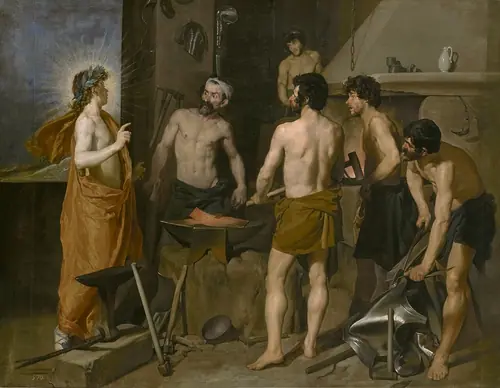
- Apollo in the Forge of Vulcan Diego VelázquezAlso by Diego Velázquez
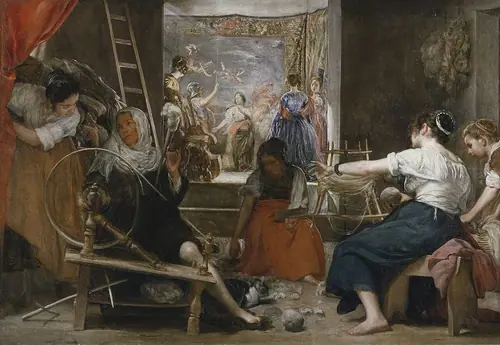
- Las Meninas Diego VelázquezAlso by Diego Velázquez
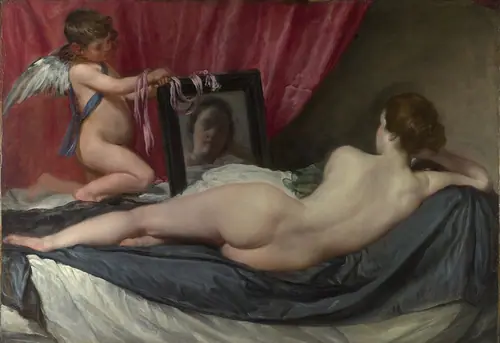
- Rokeby Venus Diego VelázquezAlso by Diego Velázquez
What do you see?
Stand in front of it for a moment. Then tell us what you noticed or felt - there are no wrong answers.
Be the first to share a thought.
More by Diego Velázquez
If you like this, stand in front of these