Inside the Canvas
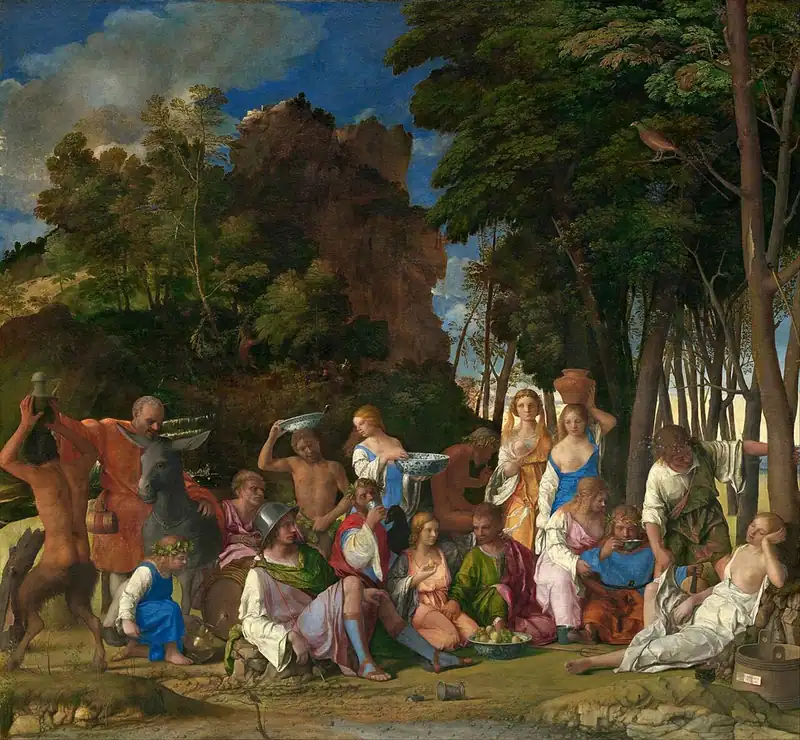
Tip: move over the painting to use the lens.
The Feast of the Gods
Titian · 1529
What secrets lie hidden in this 16th-century feast?
- Artist
- Titian
- Date
- 1529
Public domain · image via Wikimedia Commons · see it at the museum ↗
Updated 13 October 2026 · how we write
Our perspective
Our own reading of the picture - an opinion, not a fact.
As you stand in front of this painting, you can't help but feel like you're part of the grand celebration. The colors and textures seem to leap off the canvas, drawing you into the world of ancient mythology. You start to wonder what stories these gods would tell, and what secrets they would share, if only they could speak to you.
In today's fast-paced world, where we're constantly connected to our devices, The Feast of the Gods reminds us of the importance of slowing down and appreciating the beauty around us. It's a gentle reminder to put down our phones and take in the world with our own eyes, just as the artists of the Renaissance did.
This painting asks us to stop and contemplate the beauty of the world, just as the gods of ancient mythology did. It's a call to remember the importance of art, culture, and community, and to find joy in the simple pleasures of life.
Slow Look
- The gods' table Notice the intricate details of the table setting, with its fine linens, silverware, and ornate platters.
- The figures in the background Look closely at the figures in the background, lost in conversation and laughter. Try to imagine what they're discussing and what stories they're sharing.
- The landscape Take a moment to appreciate the beautiful landscape, with its rolling hills, towering trees, and serene lake.
- The mythological creatures Look for the mythological creatures scattered throughout the painting, such as the centaurs, satyrs, and putti. Try to spot the different symbols and allusions hidden within the artwork.
- The artist's signature Search for the artist's signature, hidden in the foliage or among the architectural elements. It's a subtle yet significant touch, adding to the overall majesty of the painting.
About Titian
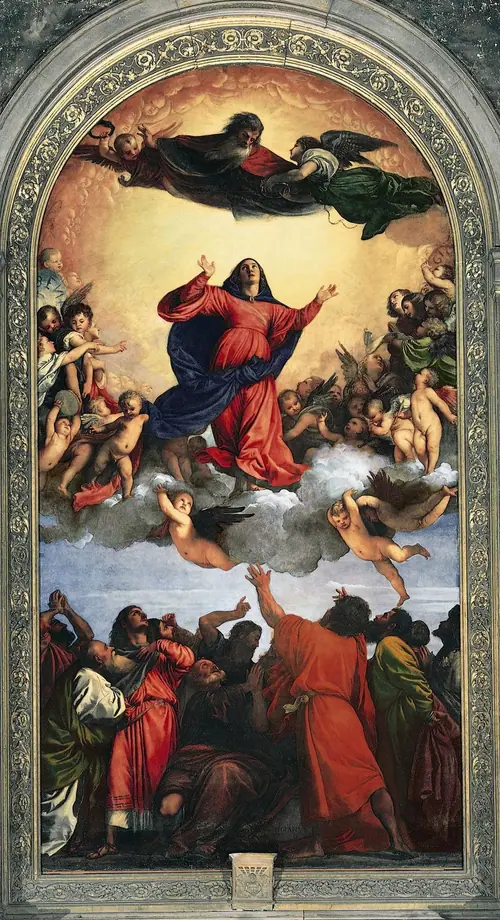
Titian (Tiziano Vecellio, about 1488/90-1576) was the greatest painter of 16th-century Venice. Trained in the circle of Giovanni Bellini and Giorgione, he became famous for glowing colour and soft, lively brushwork rather than hard outlines. His Assumption of the Virgin (1516-18) in the Frari church made his name, and he went on to paint portraits for popes, Emperor Charles V and Philip II of Spain. In his long late career his handling became looser and more expressive, inspiring painters from Rubens to Velazquez.
Keep reading
- Sacred and Profane Love TitianAlso by Titian
- Venus of Urbino TitianAlso by Titian
- Equestrian Portrait of Charles V TitianAlso by Titian
What do you see?
Stand in front of it for a moment. Then tell us what you noticed or felt - there are no wrong answers.
Be the first to share a thought.
More by Titian
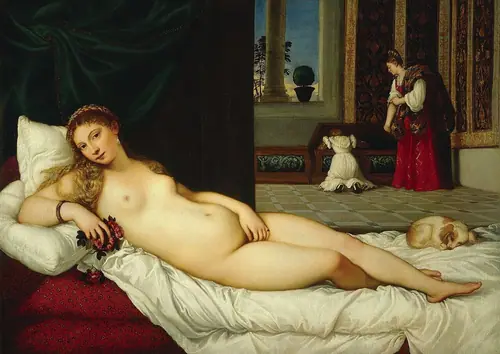
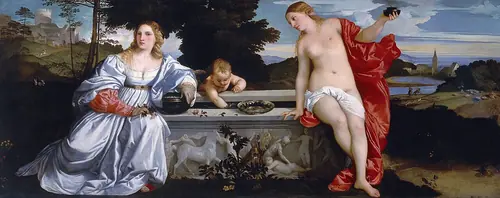
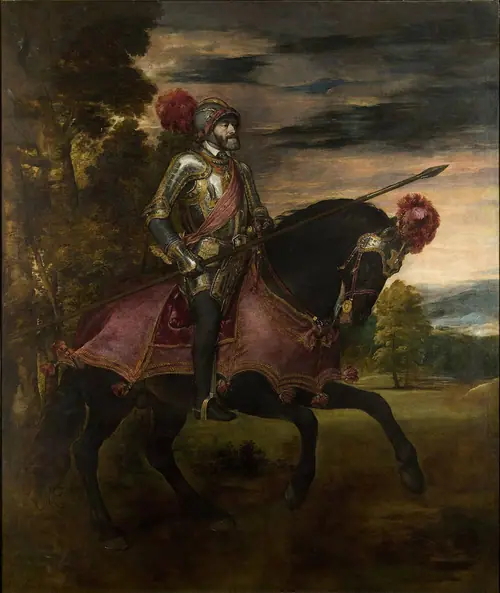
If you like this, stand in front of these