Inside the Canvas
Tip: move over the painting to use the lens.
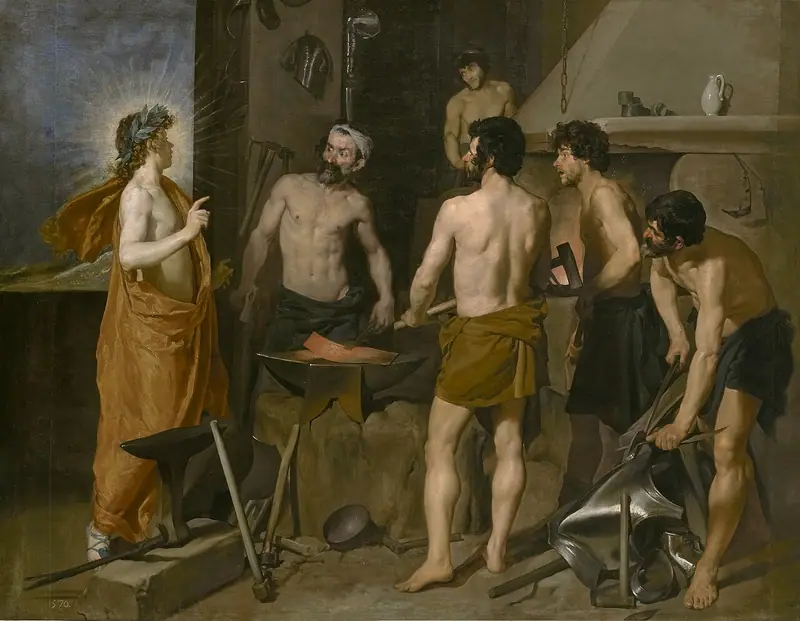
Apollo in the Forge of Vulcan
Diego Velázquez · 1630
Is ancient art a reflection of our modern anxieties?
- Artist
- Diego Velázquez
- Date
- 1630
- Where to see it
- Museo del Prado
Museo del Prado · Public domain · image via Wikimedia Commons · see it at the museum ↗
Updated 25 October 2026 · how we write
The story
Diego Velázquez's Apollo in the Forge of Vulcan is an oil painting completed in 1630.
The painting appears to be part of the royal collections, although it was not commissioned by the king.
It is now part of the collection at the Museo del Prado in Madrid, having been acquired in 1819.
Our perspective
Our own reading of the picture - an opinion, not a fact.
As you stand in front of Apollo in the Forge of Vulcan, you can't help but feel a sense of tension and anticipation.
The ancient mythological scene seems to reverberate with the modern anxiety of waiting for something to happen.
What does it mean to be in a state of suspended action, like Apollo in the forge, waiting for the hammer to strike?
Perhaps it's a reminder that even in the most seemingly static moments, there is always the potential for change and transformation.
Slow Look
- The central figure of Apollo Notice how his gaze is fixed on the hammer, as if anticipating the moment of creation.
- The forge itself Take in the intricate details of the forge, with its hissing flames and glowing embers.
- The surrounding figures Look at the other mythological figures gathered around the forge, each with their own story to tell.
- The shadows and light Notice how the light and shadows on the figures create a sense of depth and dimension.
- The edges of the composition Look at the subtle edges of the composition, where the figures blend into the background.
About Diego Velázquez
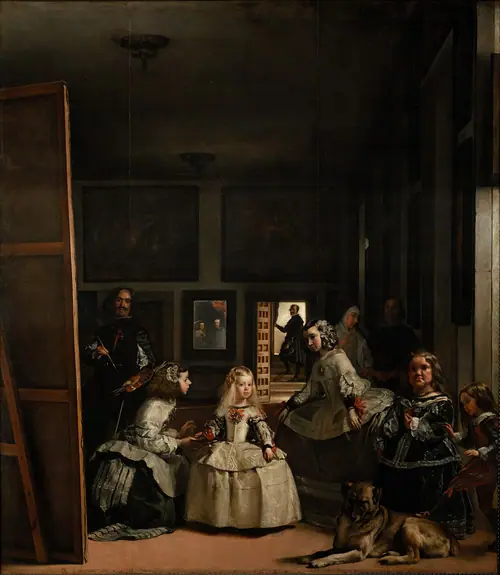
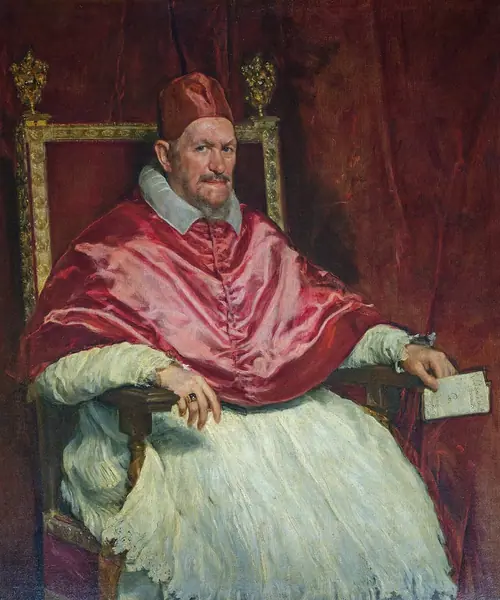
Diego Velazquez (1599-1660) was born in Seville and became court painter to King Philip IV of Spain in 1623, a post he held for the rest of his life. He painted the royal family, courtiers and ordinary people with the same direct, loose brushwork. On a trip to Rome he painted a celebrated portrait of Pope Innocent X (1650). His Las Meninas (1656), now in the Prado, is one of the most studied paintings in the world. Edouard Manet later called him the painter of painters.
Questions about Apollo in the Forge of Vulcan
What is the story behind Apollo in the Forge of Vulcan?
Diego Velázquez's Apollo in the Forge of Vulcan is an oil painting completed in 1630.
Which artist painted Apollo in the Forge of Vulcan?
Diego Velázquez painted Apollo in the Forge of Vulcan.
When was Apollo in the Forge of Vulcan painted?
Diego Velázquez's Apollo in the Forge of Vulcan is dated 1630 in the museum record.
Which museum has Apollo in the Forge of Vulcan?
You can see it at Museo del Prado, which holds it in its collection.
How can I see Diego Velázquez's 'Apollo in the Forge of Vulcan' in person?
The painting is displayed at the Museo del Prado in Madrid.
What makes Apollo in the Forge of Vulcan an important work in Western art?
Apollo in the Forge of Vulcan is considered one of Velázquez's most successful compositions, with a unified and natural interaction of figures.
Keep reading
- Las Meninas Diego VelázquezAlso by Diego Velázquez
- Portrait of Innocent X Diego VelázquezAlso by Diego Velázquez
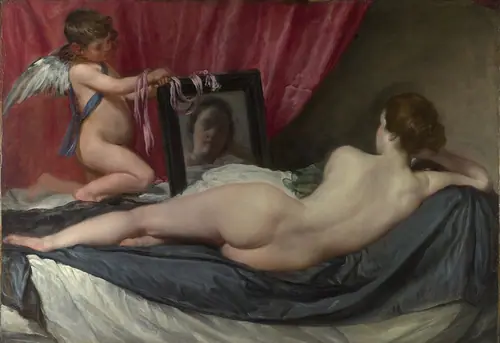
- Rokeby Venus Diego VelázquezAlso by Diego Velázquez
What do you see?
Stand in front of it for a moment. Then tell us what you noticed or felt - there are no wrong answers.
Be the first to share a thought.
More by Diego Velázquez


If you like this, stand in front of these