Inside the Canvas
Tip: move over the painting to use the lens.
The Last Day of Pompeii
Karl Bryullov · 1833
Ancient tragedy unfolds on canvas - a question of fate?
- Artist
- Karl Bryullov
- Date
- 1833
- Where to see it
- Demidov collection
Demidov collection · Public domain · image via Wikimedia Commons · see it at the museum ↗
Updated 26 October 2026 · how we write
The story
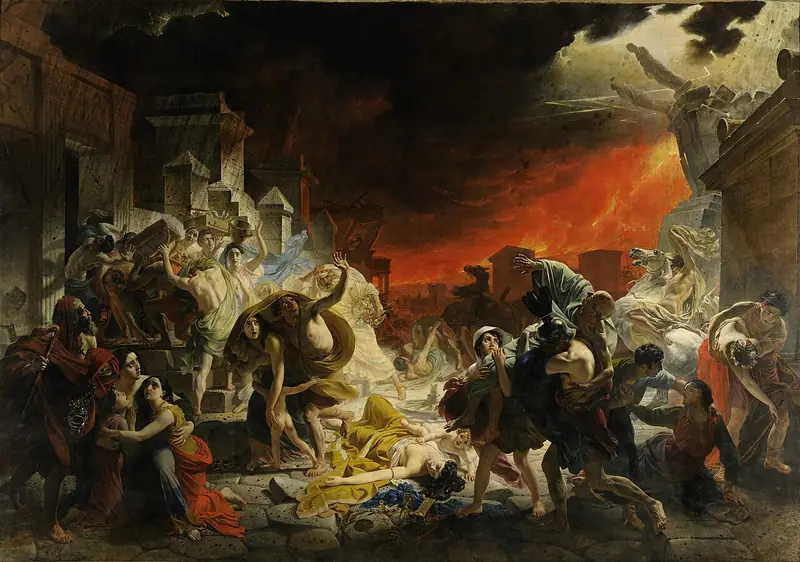
This large-scale artwork was created between 1830 and 1833 and is a remarkable blend of Russian Neoclassicism and French Romanticism. The painting depicts the devastating eruption of Mount Vesuvius in 79 AD, which destroyed the ancient city of Pompeii.
This powerful piece is a testament to Bryullov's skill as a painter and his ability to convey the drama and tragedy of a bygone era. As a Russian painter, Bryullov was heavily influenced by the cultural and artistic movements of his time, and this work reflects his unique perspective and style.
This painting is a must-see for anyone interested in art, history, or culture.
Our perspective
Our own reading of the picture - an opinion, not a fact.
As you stand before this painting, you can't help but feel a sense of awe and wonder at the scale and drama of the scene. It's as if you're transported back in time to the ancient city of Pompeii, where the very fabric of life is being torn apart by the fury of the volcano. The painting asks us to consider the fragility of human existence and the power of natural forces.
In a world where we're constantly bombarded with noise and distractions, this painting is a welcome respite from the chaos. It invites us to slow down, take a deep breath, and immerse ourselves in the beauty and tragedy of a bygone era.
Slow Look
- the towering volcano in the distance the ominous cloud of ash and smoke that hangs in the air
- the figures of the Pompeiians the fear and panic etched on their faces as they flee from the disaster
- the buildings and architecture of Pompeii the intricate details and the contrast between the beauty of the city and the chaos of the eruption
- the people caught in the midst of the disaster the desperation and despair as they try to escape the deadly ash and debris
- the subtle colors and shading the way the light and color seem to dance across the canvas, drawing you in and holding your attention
About Karl Bryullov
Karl Pavlovich Bryullov was a Russian painter and draughtsman during the Romantic period, remembered among the greatest visual artists in the history of Russian art.
Text adapted from Wikipedia, Karl Bryullov, licensed CC BY-SA 4.0.
Questions about The Last Day of Pompeii
What should I know about The Last Day of Pompeii?
This large-scale artwork was created between 1830 and 1833 and is a remarkable blend of Russian Neoclassicism and French Romanticism. The painting depicts the devastating eruption of Mount Vesuvius in 79 AD, which destroyed the ancient city of Pompeii.
Who is the artist of The Last Day of Pompeii?
Karl Bryullov painted The Last Day of Pompeii.
What is the date of The Last Day of Pompeii?
The Last Day of Pompeii is dated 1833.
Which museum has The Last Day of Pompeii?
It is in the collection of Demidov collection.
How was The Last Day of Pompeii by Karl Bryullov created?
The Last Day of Pompeii was created between 1830 and 1833, blending Russian Neoclassicism and French Romanticism.
Keep reading
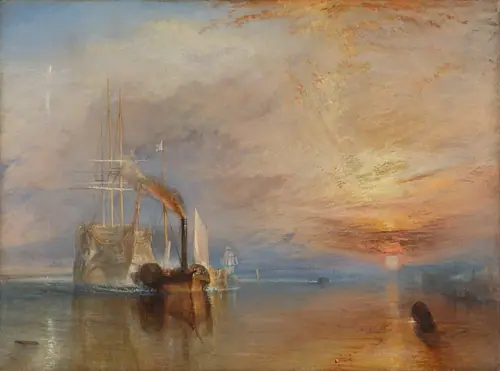
- The Fighting Temeraire J. M. W. TurnerShared themes: history, melancholic, romanticism
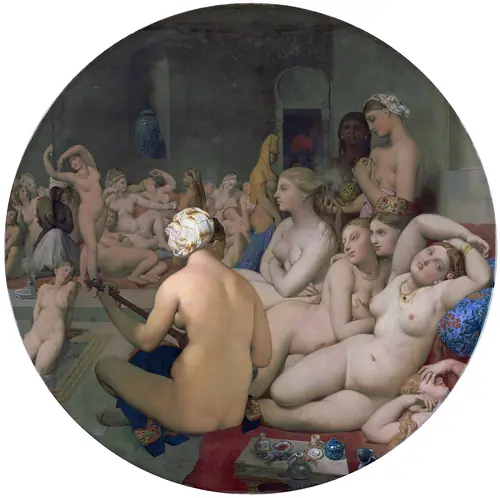
- The Turkish Bath Jean-Auguste-Dominique IngresShared themes: art, history, painting
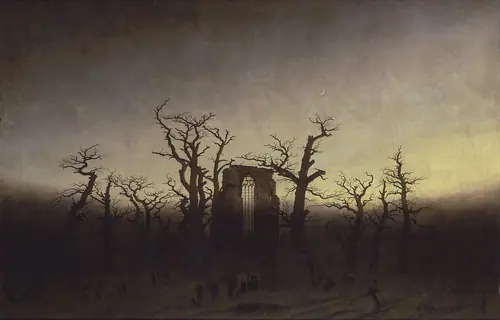
- The Abbey in the Oakwood Caspar David FriedrichShared themes: art, history, melancholic
What do you see?
Stand in front of it for a moment. Then tell us what you noticed or felt - there are no wrong answers.
Be the first to share a thought.
If you like this, stand in front of these