Inside the Canvas
Tip: move over the painting to use the lens.
The Turkish Bath
Jean-Auguste-Dominique Ingres · 1862
Is this a fantasy or reality?
- Artist
- Jean-Auguste-Dominique Ingres
- Date
- 1862
- Where to see it
- Louvre
Louvre · Public domain · image via Wikimedia Commons · see it at the museum ↗
Updated 24 October 2026 · how we write
The story
Jean-Auguste-Dominique Ingres completed 'The Turkish Bath' between 1852 and 1859, but modified it in 1862.
In 'The Turkish Bath', Ingres brings together a range of artistic influences, from the Near East to earlier western styles. The painting is an example of Romanticism, a style that emphasizes emotion and imagination. It is also an example of Ingres' own unique style, which blends elements of Neoclassicism and Romanticism.
The painting is an example of Ingres' ability to create complex, detailed scenes that are both beautiful and thought-provoking.
Our perspective
Our own reading of the picture - an opinion, not a fact.
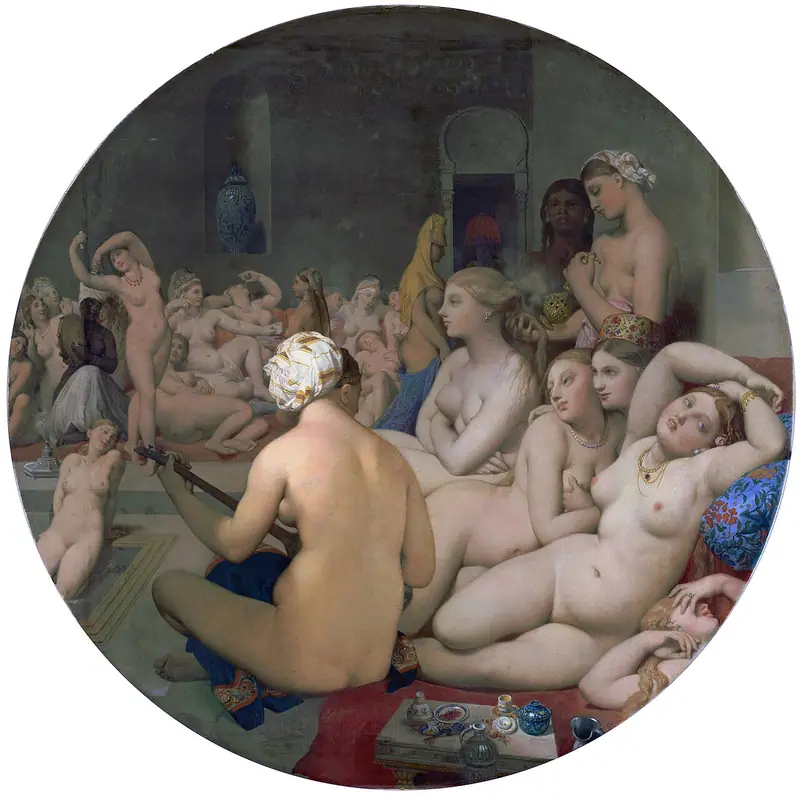
As you stand in front of 'The Turkish Bath', you can't help but be drawn into the intimate world of the harem. The painting is like a window into a hidden world, full of mystery and intrigue. It's a reminder that even in the most private and secluded spaces, there is always a sense of community and connection.
What strikes you about 'The Turkish Bath' is the sense of stillness and quiet contemplation that pervades the scene. It's as if the women are lost in thought, oblivious to the outside world. The painting invites you to do the same, to step into the scene and let your worries fade away.
'The Turkish Bath' is a painting that rewards close attention and slow contemplation. It's a reminder that art can be a source of comfort and solace, a way to escape the stresses and pressures of everyday life.
Slow Look
- the first glance The initial impression is of a serene and peaceful scene.
- the women's faces Take a closer look at the women's faces and notice the subtle expressions of contemplation and relaxation.
- the architecture The architecture of the harem is intricate and beautiful, with ornate tiles and carved stone.
- the women's bodies The women's bodies are depicted in a natural and relaxed state, with no hint of modesty or shame.
- the background The background of the painting is subtle and understated, allowing the focus to remain on the women and the harem.
About Jean Auguste Dominique Ingres
Jean-Auguste-Dominique Ingres was a French Neoclassical painter. Ingres was profoundly influenced by past artistic traditions and aspired to become the guardian of academic orthodoxy against the ascendant Romantic style. Although he considered himself a painter of history in the tradition of Nicolas Poussin and Jacques-Louis David, it is his portraits, both painted and drawn, that are recognized as his greatest legacy. His expressive distortions of form and space made him an important precursor of modern art, influencing Henri Matisse, Pablo Picasso, and other modernists.
Text adapted from Wikipedia, Jean Auguste Dominique Ingres, licensed CC BY-SA 4.0.
Questions about The Turkish Bath
What should I know about The Turkish Bath?
Jean-Auguste-Dominique Ingres completed 'The Turkish Bath' between 1852 and 1859, but modified it in 1862.
Who painted The Turkish Bath?
Jean-Auguste-Dominique Ingres painted The Turkish Bath.
What is the date of The Turkish Bath?
Jean-Auguste-Dominique Ingres's The Turkish Bath is dated 1862 in the museum record.
Where is The Turkish Bath today?
The Turkish Bath is held by Louvre.
What is the setting of Ingres' The Turkish Bath?
It shows an imagined harem bath: the enclosed interior mainly frames the crowded group of bathers. Ingres never visited one; he drew on travellers' accounts such as Lady Mary Wortley Montagu's letters and painted it as a round (tondo) picture.
What emotions do the women's faces convey in the Turkish Bath?
The women's faces convey contemplation and relaxation.
Keep reading
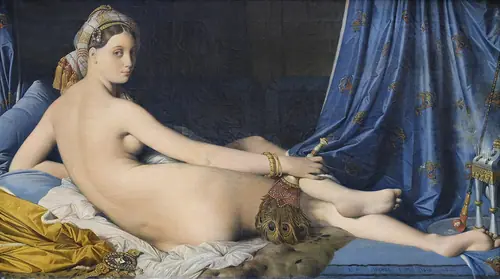
- Grande Odalisque Jean-Auguste-Dominique IngresAlso by Jean-Auguste-Dominique Ingres
- Mona Lisa Leonardo da VinciAlso at Louvre
- The Intervention of the Sabine Women Jacques-Louis DavidAlso at Louvre
What do you see?
Stand in front of it for a moment. Then tell us what you noticed or felt - there are no wrong answers.
Be the first to share a thought.
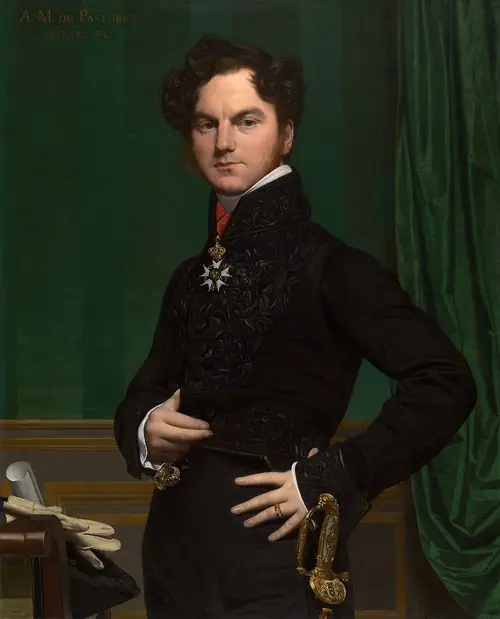
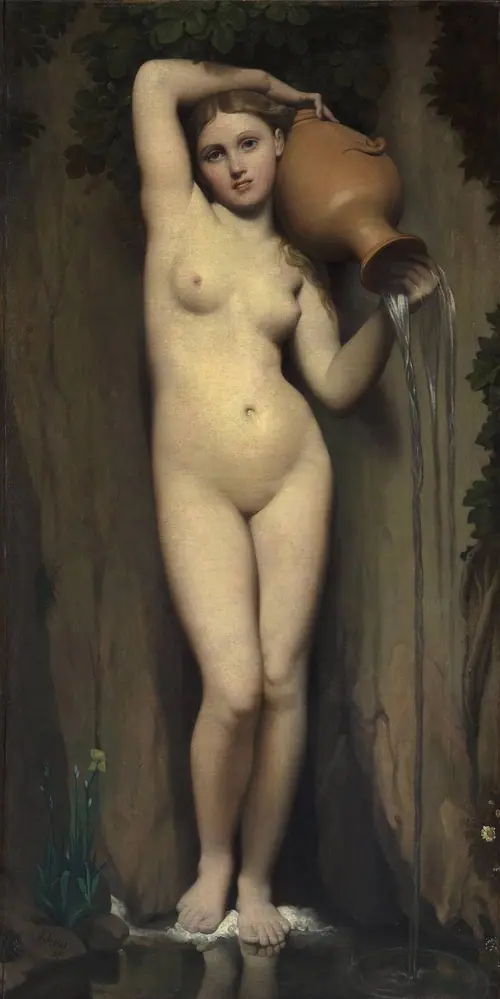
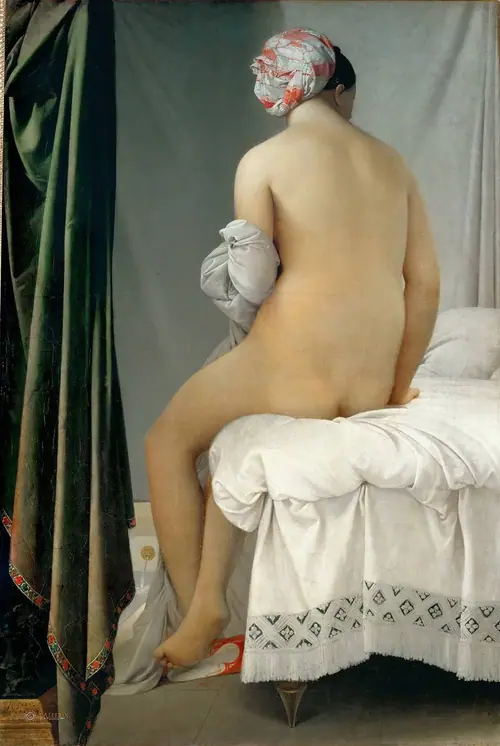
More by Jean-Auguste-Dominique Ingres
If you like this, stand in front of these