Inside the Canvas
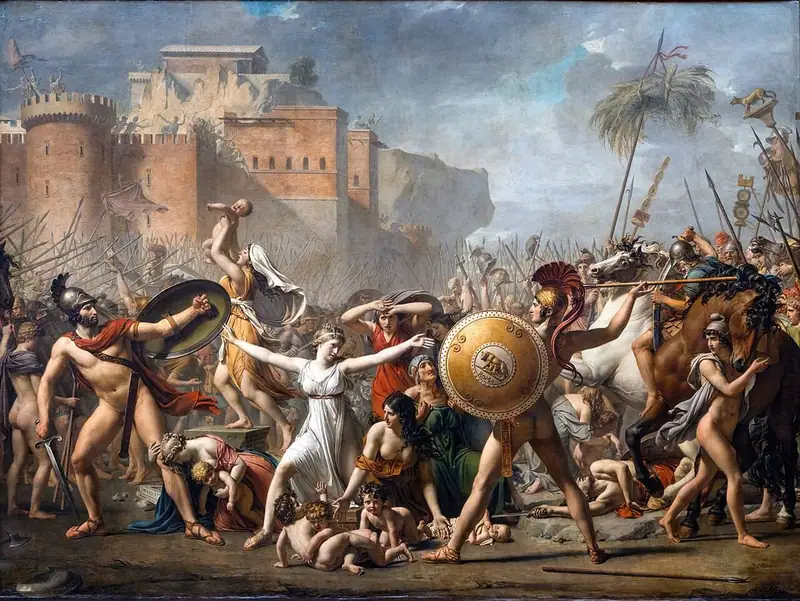
Tip: move over the painting to use the lens.
The Intervention of the Sabine Women
Jacques-Louis David · 1799
What happened when men and women stood together?
- Artist
- Jacques-Louis David
- Date
- 1799
- Where to see it
- Louvre
Louvre · Public domain · image via Wikimedia Commons · see it at the museum ↗
Updated 16 October 2026 · how we write
The story
Jacques-Louis David's 1799 painting, The Intervention of the Sabine Women, depicts a legendary episode in Roman history.
The painting shows the founding generation of Rome, led by Romulus, having abducted the Sabine women, the mothers and sisters of the Sabine men.
The Sabine women, tired of being mistreated and longing for their families, intervene to end the conflict and reconcile the two nations.
The painting is a representation of the French painter's commitment to Neoclassicism, a style that emphasized classical ideals and moral values.
Our perspective
Our own reading of the picture - an opinion, not a fact.
As you stand in front of The Intervention of the Sabine Women, you can't help but feel a sense of longing and yearning.
This painting asks us to consider the power of women in conflict resolution and the importance of family and community.
The Sabine women's intervention is a powerful reminder of the human capacity for empathy and compassion, even in the face of adversity.
Slow Look
- The central figures Notice how the Sabine women's faces express a mix of determination and sadness.
- The Sabine men Observe the subtle gestures of the Sabine men, their eyes cast downward in shame.
- The Roman men See the Roman men's stern expressions, their arms crossed in defiance.
- The background Notice the subtle use of color and light in the background, adding depth and texture to the scene.
- The Sabine women's hands Look closely at the Sabine women's hands, gently reaching out to the Sabine men.
About Jacques Louis David
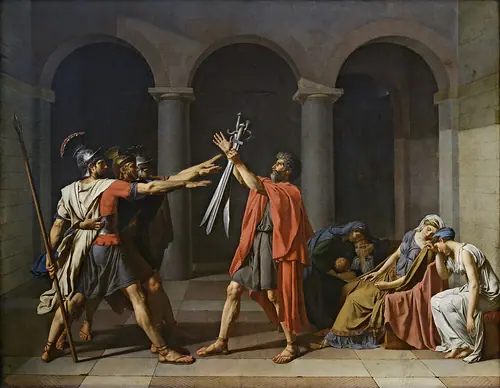
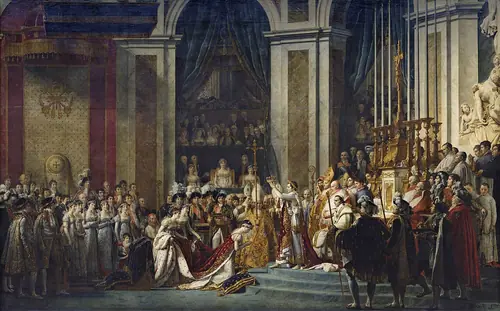
Jacques-Louis David (1748-1825) was the leading painter of French Neoclassicism. After studying in Rome, he made his name with The Oath of the Horatii (1784), a stern, clear-cut scene from ancient Roman history. He was deeply involved in the politics of the French Revolution, and later became the official painter of Napoleon, producing Napoleon Crossing the Alps and the huge Coronation of Napoleon. After Napoleon's fall he went into exile in Brussels, where he died in 1825. His pupils included Ingres and Gros.
Questions about The Intervention of the Sabine Women
What is known about The Intervention of the Sabine Women by Jacques-Louis David?
Jacques-Louis David's 1799 painting, The Intervention of the Sabine Women, depicts a legendary episode in Roman history.
Which artist painted The Intervention of the Sabine Women?
The Intervention of the Sabine Women was painted by Jacques-Louis David.
When was The Intervention of the Sabine Women painted?
The museum record dates The Intervention of the Sabine Women to 1799.
Where can I see The Intervention of the Sabine Women?
The Intervention of the Sabine Women is held by Louvre.
What motivated the Sabine women to intervene in the conflict?
The Sabine women intervened to end the conflict and reconcile the two nations, tired of being mistreated and longing for their families.
Keep reading
- Grande Odalisque Jean-Auguste-Dominique IngresAlso at Louvre
- Mona Lisa Leonardo da VinciAlso at Louvre
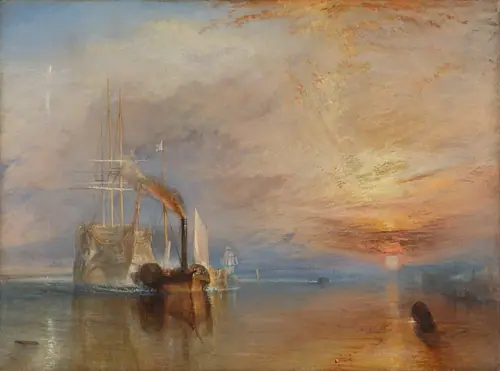
- The Fighting Temeraire J. M. W. TurnerShared themes: history, reflective
What do you see?
Stand in front of it for a moment. Then tell us what you noticed or felt - there are no wrong answers.
Be the first to share a thought.
More by Jacques-Louis David
If you like this, stand in front of these