Inside the Canvas
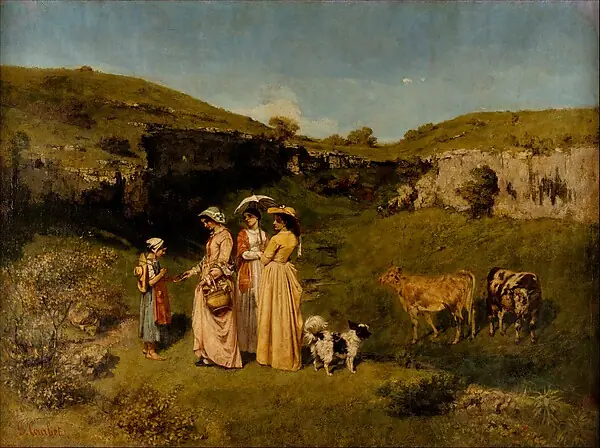
Tip: move over the painting to use the lens.
Young Ladies of the Village
Gustave Courbet · 1851–52
Who are these village girls, really?
- Artist
- Gustave Courbet French, Ornans 1819–1877 La Tour-de-Peilz
- Date
- 1851–52
- Medium
- Oil on canvas
- Size
- 76 3/4 x 102 3/4 in. (194.9 x 261 cm)
- Where to see it
- The Metropolitan Museum of Art
Gift of Harry Payne Bingham, 1940 · CC0 Public Domain · The Met · see it at the museum ↗
Updated 13 October 2026 · how we write
The story
The painting is an example of Courbet's Realist style, which focused on everyday life and rejected academic convention. The painting is considered an important work in 19th-century French painting.
The Metropolitan Museum of Art describes the painting as 'an 1852 oil-on-canvas painting by Gustave Courbet'. It is one of the many works by Courbet in the museum's collection.
Our perspective
Our own reading of the picture - an opinion, not a fact.
As I stand in front of this painting, I am struck by the sense of quiet intimacy that the three girls share. It's as if they're having a private conversation, unaware of my gaze.
This painting asks us to consider the lives of women in rural France during the 19th century. Are these girls the next generation of farmers, or are they already looking to escape their rural life?
Slow Look
- The girls' faces Notice the subtle expressions on each girl's face, a mix of curiosity and contemplation.
- The cows and dogs See how the animals are integrated into the scene, adding to the sense of rural life.
- The baskets and parasols Notice the colorful baskets and parasols, a reflection of the girls' individual personalities.
- The village landscape Take in the rolling hills and distant trees, which provide a sense of depth and context.
- The artist's signature Look for the signature 'G. Courbet' in the bottom left corner, a reminder of the artist's presence in the scene
About Gustave Courbet
Jean Désiré Gustave Courbet was a French painter who led the Realism movement in 19th-century French painting. Committed to painting only what he could see, he rejected academic convention and the Romanticism of the previous generation of visual artists. His independence set an example that was important to later artists, such as the Impressionists and the Cubists. Courbet occupies an important place in 19th-century French painting as an innovator and as an artist willing to make bold social statements through his work.
Text adapted from Wikipedia, Gustave Courbet, licensed CC BY-SA 4.0.
Keep reading
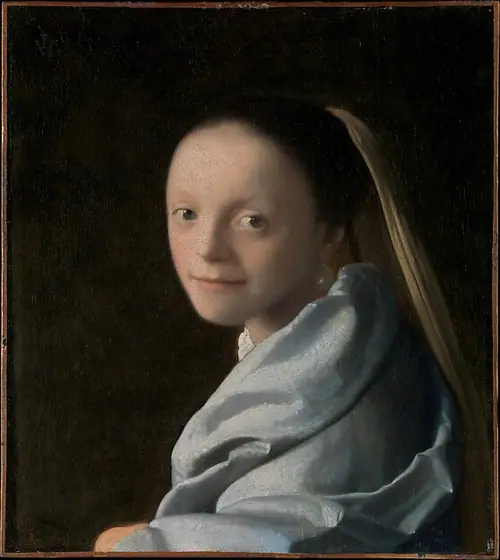
- Study of a Young Woman Johannes VermeerAlso at The Metropolitan Museum of Art
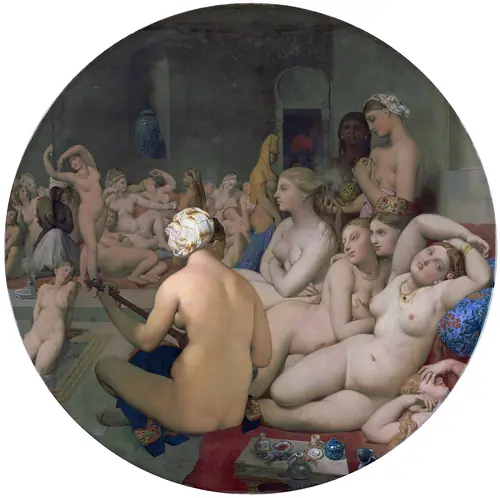
- The Turkish Bath Jean-Auguste-Dominique IngresShared themes: contemplative, intimate, women
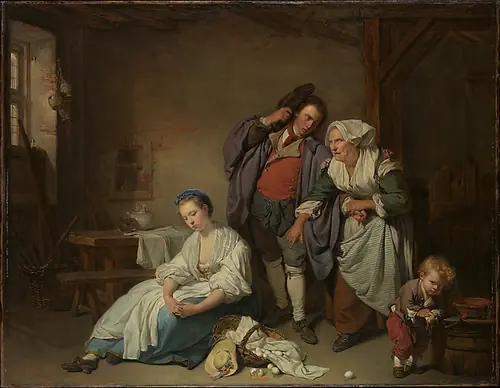
- Broken Eggs Jean-Baptiste GreuzeAlso at The Metropolitan Museum of Art
What do you see?
Stand in front of it for a moment. Then tell us what you noticed or felt - there are no wrong answers.
Be the first to share a thought.
More by Gustave Courbet
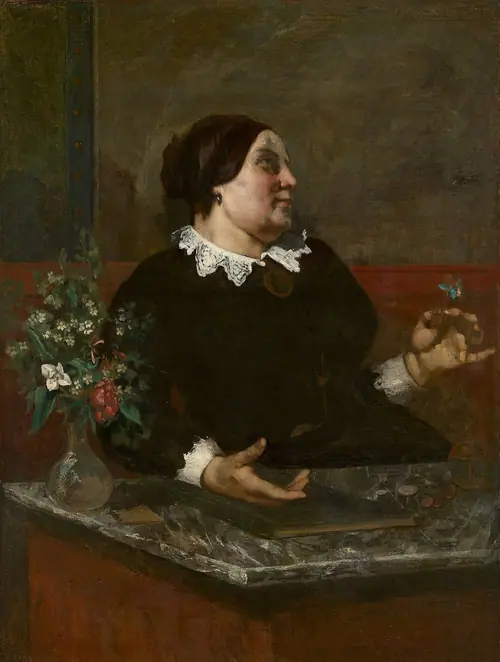
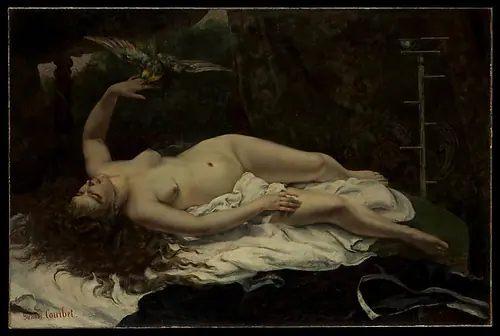
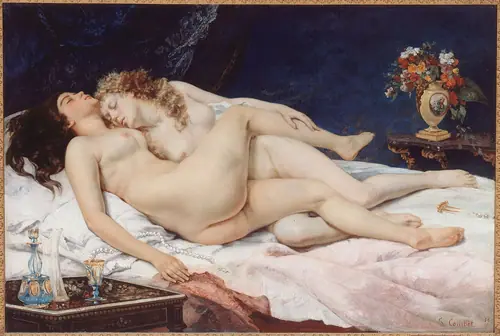
If you like this, stand in front of these