 Inside the Canvas
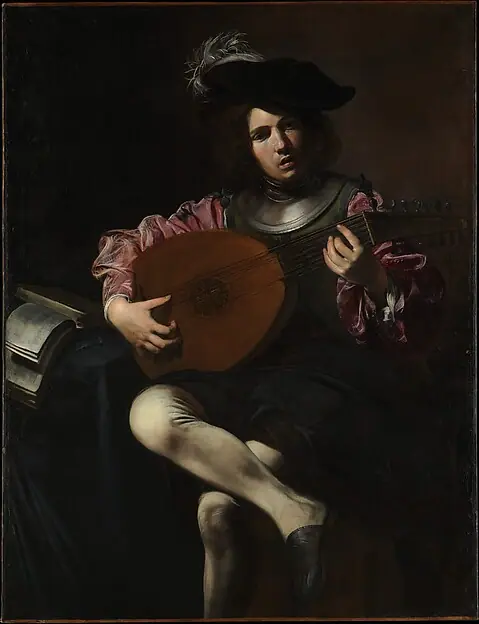
Tip: move over the painting to use the lens.
Lute Player
Valentin de Boulogne · ca. 1625–26
- Artist
- Valentin de Boulogne French, Coulommiers-en-Brie 1591–1632 Rome
- Date
- ca. 1625–26
- Medium
- Oil on canvas
- Size
- 50 1/2 x 39 in. (128.3 x 99.1 cm)
- Where to see it
- The Metropolitan Museum of Art
Purchase, Walter and Leonore Annenberg Acquisitions Endowment Fund; Director's Fund; Acquisitions Fund; James and Diane Burke and Mark Fisch and Rachel Davidson Gifts; Louis V. Bell, Harris Brisbane Dick, Fletcher, and Rogers Funds and Joseph Pulitzer Bequest, 2008 · CC0 Public Domain · The Met · see it at the museum ↗
Updated 13 October 2026 · how we write
Slow Look
- The whole picture Let your eyes wander. Where do they want to rest?
- The light Find the brightest spot. What is it showing you?
- The edges Look at what is half cut off at the borders.
- One small detail Choose one tiny thing and stay with it for a while.
- The whole picture again Step back. Has it changed for you?
About Valentin de Boulogne
Valentin de Boulogne, sometimes referred to as Le Valentin, was a French painter in the tenebrist style.
Text adapted from Wikipedia, Valentin de Boulogne, licensed CC BY-SA 4.0.
Keep reading
- Study of a Young Woman Johannes VermeerAlso at The Metropolitan Museum of Art
- Oedipus and the Sphinx Gustave MoreauAlso at The Metropolitan Museum of Art
- The Horse Fair Rosa BonheurAlso at The Metropolitan Museum of Art
What do you see?
Stand in front of it for a moment. Then tell us what you noticed or felt - there are no wrong answers.
Be the first to share a thought.
If you like this, stand in front of these
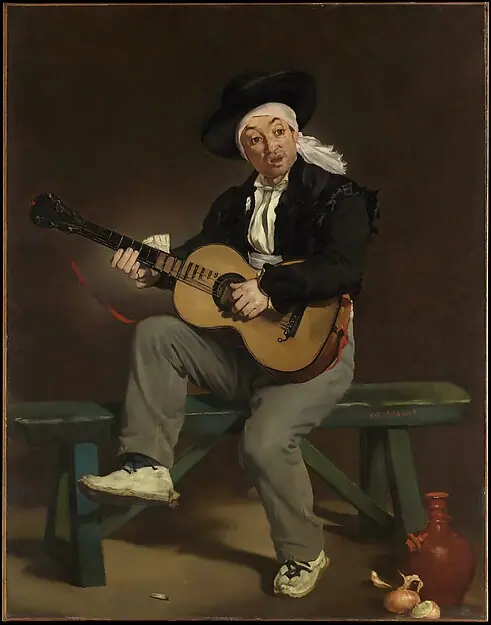
The Spanish SingerEdouard Manet, 1860Who is the melancholic troubadour?
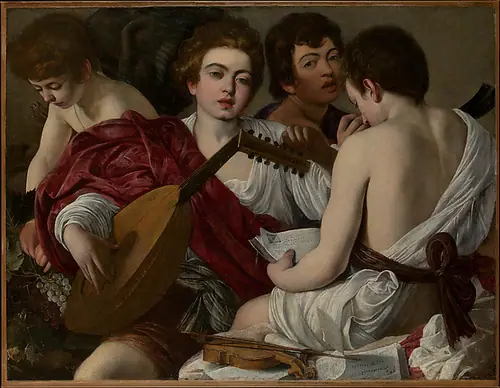
The MusiciansCaravaggio (Michelangelo Merisi), 1597
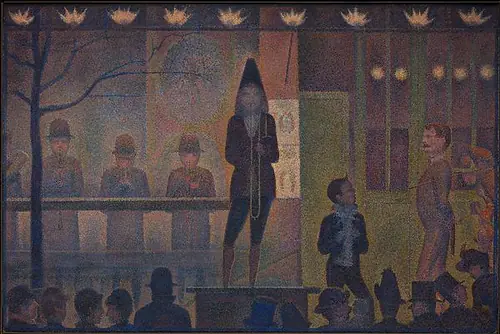
Circus Sideshow (Parade de cirque)Georges Seurat, 1887–88
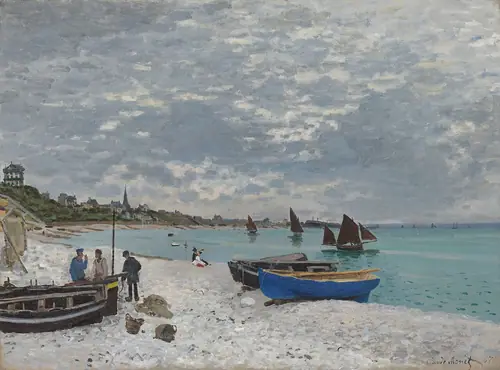
The Beach at Sainte-AdresseClaude Monet, 1867A beachside couple, lost in the moment?
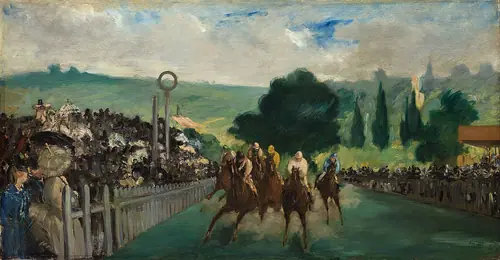
The Races at LongchampÉdouard Manet, 1866What's the thrill in witnessing history's pace?
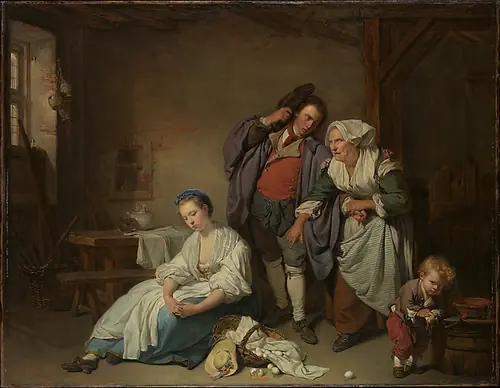
Broken EggsJean-Baptiste Greuze, 1756A 1756 painting that might just crack open our perceptions of family and identity.
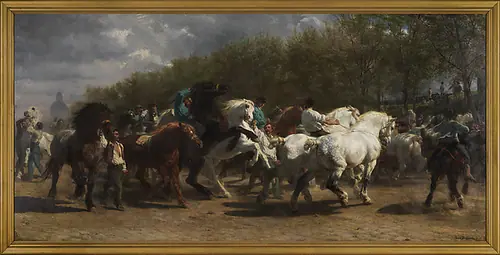
The Horse FairRosa Bonheur, 1852–55Is this 19th-century masterpiece a window into a bygone era or a timeless portrait?
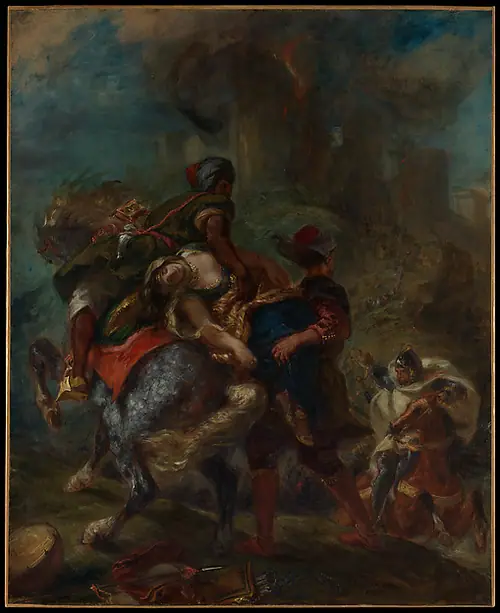
The Abduction of RebeccaEugène Delacroix, 1846Is romance just a ride away?