Inside the Canvas
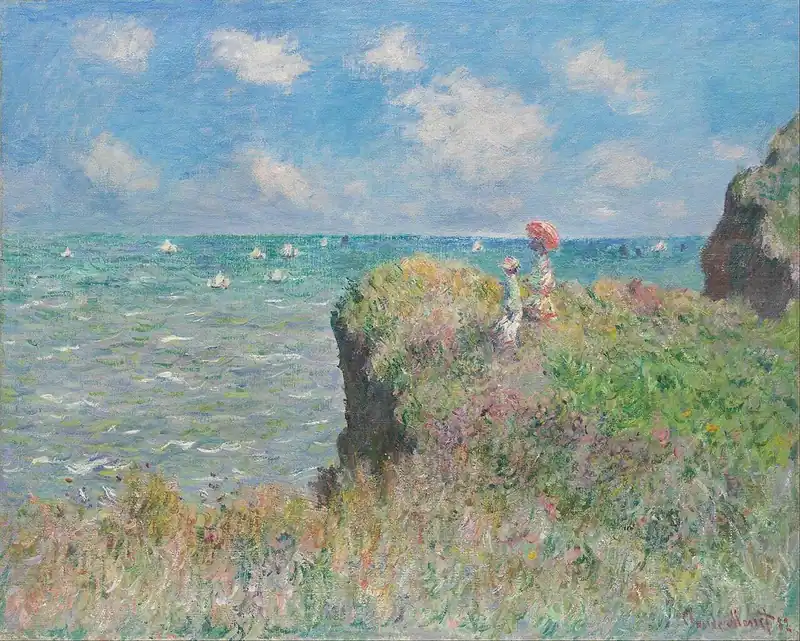
Tip: move over the painting to use the lens.
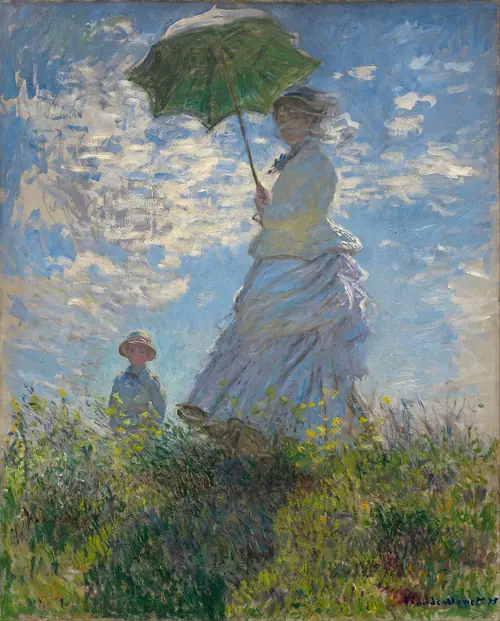
Cliff Walk at Pourville
Claude Monet · 1882
- Artist
- Claude Monet (French, 1840–1926)
- Date
- 1882
- Medium
- Oil on canvas
- Size
- 66.5 × 82.3 cm (26 1/8 × 32 7/16 in.); Framed: 88.9 × 104.8 × 10.8 cm (35 × 41 1/4 × 4 1/4 in.)
- Made in
- France
- Style
- Impressionism
- Where to see it
- Art Institute of Chicago
Mr. and Mrs. Lewis Larned Coburn Memorial Collection · CC0 Public Domain · Art Institute of Chicago · image via Wikimedia Commons · see it at the museum ↗
Updated 13 October 2026 · how we write
Notes from the museum
In February 1882, Claude Monet went to Normandy to paint, one of many such expeditions that he made in the 1880s. This was also a retreat from personal and professional pressures. His wife, Camille, had died three years earlier, and Monet had entered into a domestic arrangement with Alice Hoschedé (whom he would marry in 1892, after her husband's death). France was in the midst of a lengthy economic recession that affected Monet's sales. In addition, the artist was unenthusiastic about the upcoming seventh Impressionist exhibition—divisions within the group had become pronounced by this time—and he delegated the responsibility for his contribution to his dealer, Paul Durand-Ruel. Disappointed in the area around the harbor city of Dieppe, which he found too urban, Monet settled in Pourville and remained in this fishing village until mid-April. He became increasingly enamored of his surroundings, writing to Hoschedé and her children: "How beautiful the countryside is becoming, and what joy it would be for me to show you all its delightful nooks and crannies!" He was able to do so in June, when they joined him in Pourville.The two young women strolling in Cliff Walk at Pourville are probably Marthe and Blanche, the eldest Hoschedé daughters. In this work, Monet addressed the problem of inserting figures into a landscape without disrupting the unity of its painterly surface. He int
Text: Art Institute of Chicago (open access). Our full story for this work is coming soon.
Slow Look
- The whole picture Let your eyes wander. Where do they want to rest?
- The light Find the brightest spot. What is it showing you?
- The edges Look at what is half cut off at the borders.
- One small detail Choose one tiny thing and stay with it for a while.
- The whole picture again Step back. Has it changed for you?
About Claude Monet
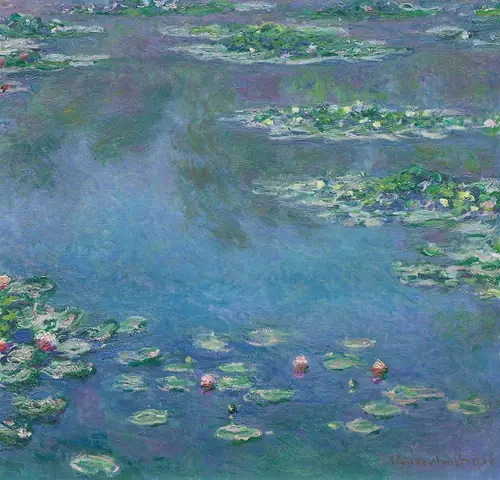
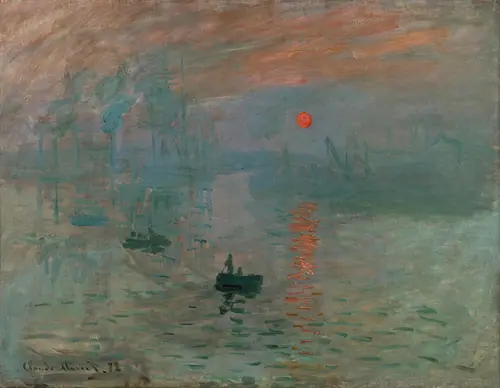
Claude Monet (1840-1926) was the leading figure of French Impressionism. A critic mocked his Impression, Sunrise at the first group exhibition in 1874, and the insult gave the whole movement its name. Monet painted outdoors to catch fleeting light, and later made series of the same subject at different times of day, such as his Haystacks, Poplars and Rouen Cathedral. From 1883 he lived at Giverny, where he built the water garden that inspired his huge Water Lilies paintings of his final decades.
Keep reading
- Water Lilies Claude MonetAlso by Claude Monet
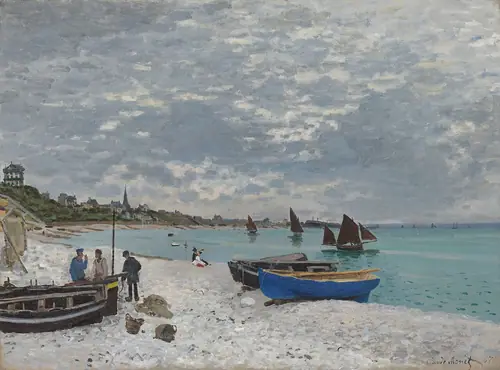
- The Beach at Sainte-Adresse Claude MonetAlso by Claude Monet
- Paris Street; Rainy Day Gustave CaillebotteAlso Impressionism
What do you see?
Stand in front of it for a moment. Then tell us what you noticed or felt - there are no wrong answers.
Be the first to share a thought.
More by Claude Monet
If you like this, stand in front of these