Tip: move over the painting to use the lens.
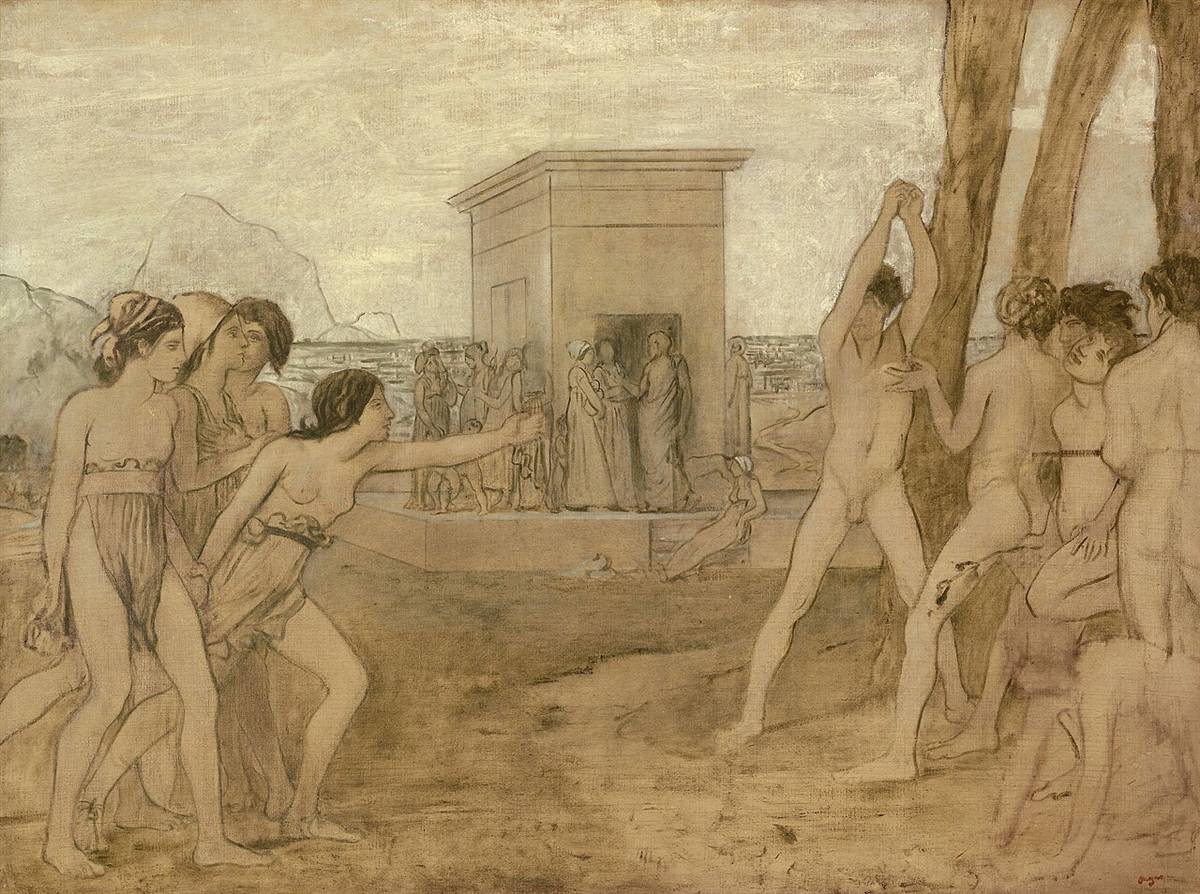
Young Spartan Girls Challenging Boys
Hilaire Germain Edgar Degas · c. 1860
- Artist
- Edgar Degas (French, 1834–1917)
- Date
- c. 1860
- Medium
- Oil on canvas
- Size
- 97.4 × 140 cm (38 5/16 × 55 1/8 in.); Framed: 130.2 × 162.6 × 11.8 cm (51 1/4 × 64 × 4 5/8 in.)
- Made in
- France
- Style
- Impressionism
- Where to see it
- Art Institute of Chicago
Charles H. and Mary F. S. Worcester Collection · CC0 Public Domain · Art Institute of Chicago · image via Wikimedia Commons · see it at the museum ↗
Notes from the museum
In 1859 Edgar Degas returned to Paris following a prolonged stay in Italy, where he visited relatives in Naples and Florence and attended life classes at the Académie Française in Rome. This picture, undertaken around 1860, speaks to his ambition to realize canvases featuring scenes from the Bible, as well as ancient and more recent history. Degas took his subject from the life of Lycurgus, a legendary ninth-century b.c. Spartan lawgiver. Lycurgus’s social reforms included an unusual method of physical training in which adolescent girls competed on an equal footing with boys, exercising nude in public. Degas would have worked up this monochromatic sketch with layers of color had he completed it, but he left it unfinished when he began a second version of the subject (National Gallery of Art, London).
Text: Art Institute of Chicago (open access). Our full story for this work is coming soon.
Slow Look
- The whole picture Let your eyes wander. Where do they want to rest?
- The light Find the brightest spot. What is it showing you?
- The edges Look at what is half cut off at the borders.
- One small detail Choose one tiny thing and stay with it for a while.
- The whole picture again Step back. Has it changed for you?
About Hilaire Germain Edgar Degas
Edgar Degas was a French Impressionist artist famous for his pastel drawings and oil paintings.
What do you see?
Stand in front of it for a moment. Then tell us what you noticed or felt - there are no wrong answers.
Be the first to share a thought.
More by Hilaire Germain Edgar Degas
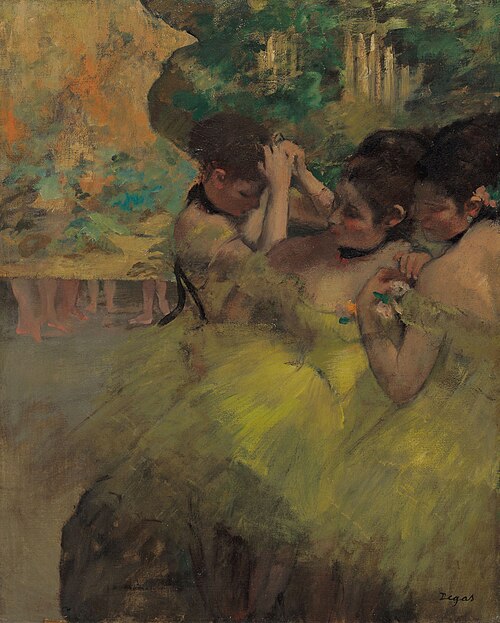
If you like this, stand in front of these