Inside the Canvas
Tip: move over the painting to use the lens.
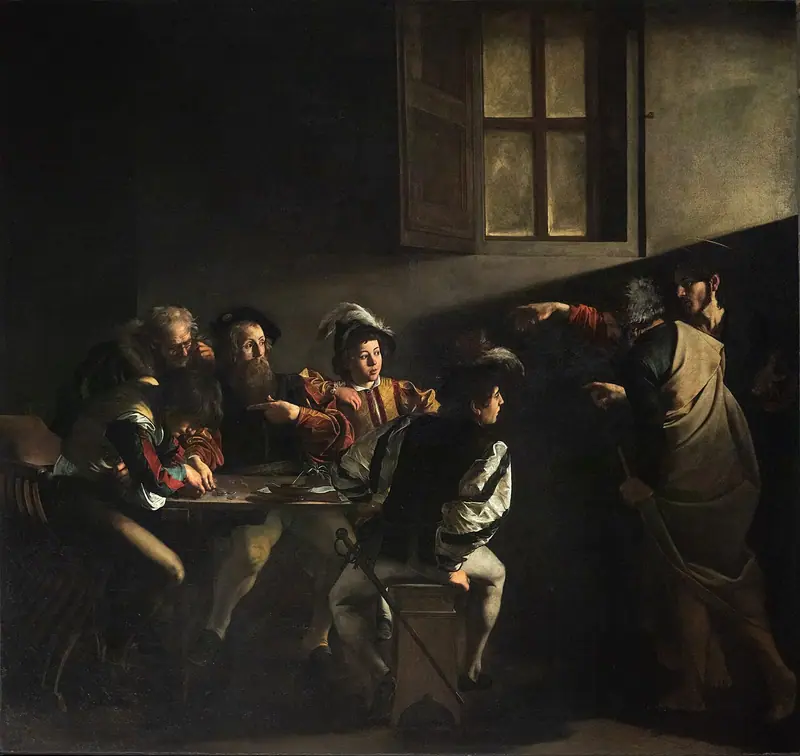
The Calling of Saint Matthew
Caravaggio · 1609
Will you answer the call?
- Artist
- Caravaggio
- Date
- 1609
- Where to see it
- San Luigi dei Francesi
San Luigi dei Francesi · Public domain · image via Wikimedia Commons · see it at the museum ↗
Updated 13 October 2026 · how we write
The story
The Calling of Saint Matthew was a significant work in Caravaggio's career, showcasing his unique style and use of lighting.
Our perspective
Our own reading of the picture - an opinion, not a fact.
Standing in front of The Calling of Saint Matthew, you can't help but feel a sense of urgency and importance. It's as if you're being called to make a decision that will change the course of your life.
This painting asks us to reflect on the choices we make and the paths we take. It's a reminder that every moment counts and that we should be mindful of the opportunities that come our way.
You can almost feel the weight of Matthew's decision-making process as you gaze upon the painting. It's a powerful reminder to be intentional and thoughtful in our own decision-making.
Slow Look
- The figure of Jesus Notice how Jesus' figure is bathed in a warm, golden light, drawing your attention to his gentle yet powerful call.
- Matthew's face Take a closer look at Matthew's face, and you'll notice the subtle expression of surprise and hesitation as he contemplates Jesus' call.
- The shadows Look at the way the shadows fall across the figures, creating a sense of depth and dimensionality that draws you in.
- The fabric Notice the intricate folds and textures of the fabric worn by the figures, adding a sense of realism to the scene.
- The background Take a moment to appreciate the subtle, muted background, which allows the figures to take center stage.
About Caravaggio
Caravaggio (1571-1610), born Michelangelo Merisi, trained in Milan from 1584 and had settled in Rome by the early 1590s. He used ordinary people as models, even for saints, and lit them with sharp light against deep shadow, a style later called tenebrism. His last years took him to Naples, Malta and Sicily, and he died at 38. Painters across Europe copied his drama and realism, and the followers became known as the Caravaggisti, which made him a key figure at the start of Baroque art.
Keep reading
- Mona Lisa Leonardo da VinciShared themes: contemplative, italy
- Lady with an Ermine Leonardo da VinciShared themes: contemplative, serene
- Water Lilies Claude MonetShared themes: reflective, serene
What do you see?
Stand in front of it for a moment. Then tell us what you noticed or felt - there are no wrong answers.
Be the first to share a thought.
More by Caravaggio
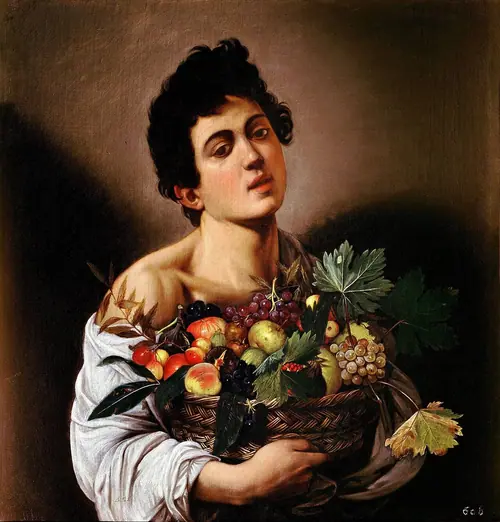
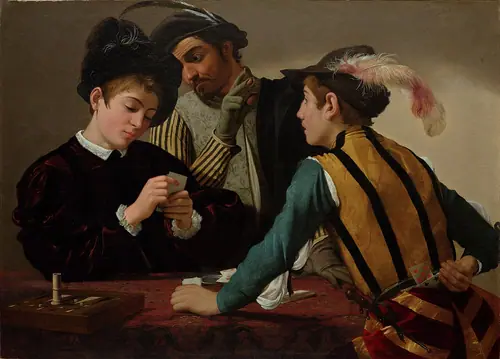
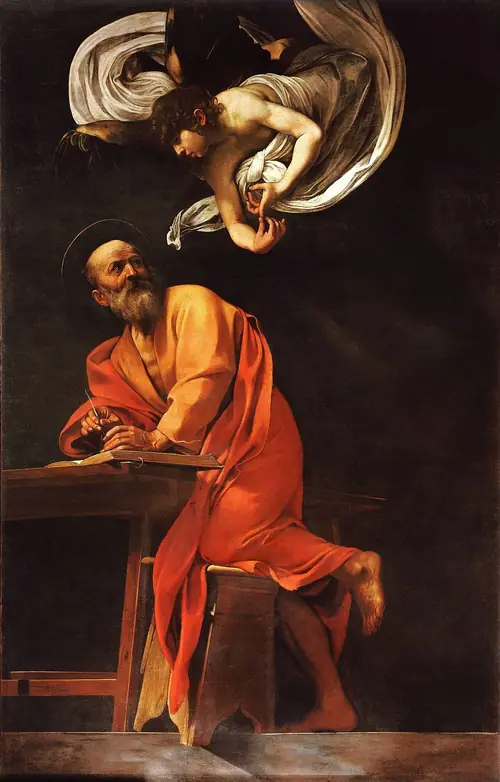
If you like this, stand in front of these