Inside the Canvas
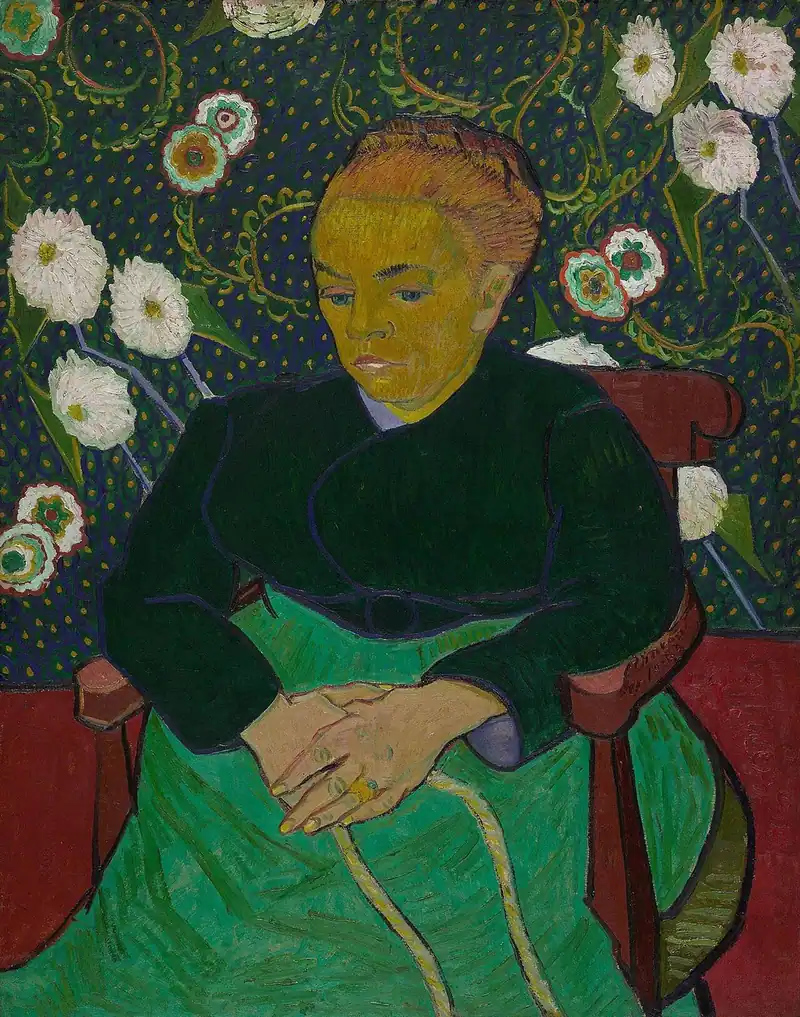
Tip: move over the painting to use the lens.
Madame Roulin Rocking the Cradle (La berceuse)
Vincent van Gogh · 1889
- Artist
- Vincent van Gogh (Dutch, 1853–1890)
- Date
- 1889
- Medium
- Oil on canvas
- Size
- 92.7 × 73.8 cm (36 1/2 × 29 1/2 in.); Framed: 111.9 × 91.8 × 8.3 cm (44 1/16 × 36 1/8 × 3 1/2 in.)
- Made in
- Netherlands
- Style
- Post-Impressionism
- Where to see it
- Art Institute of Chicago
Helen Birch Bartlett Memorial Collection · CC0 Public Domain · Art Institute of Chicago · image via Wikimedia Commons · see it at the museum ↗
Updated 13 October 2026 · how we write
Notes from the museum
Vincent van Gogh saw in Augustine Roulin—along with her husband, Joseph, and their children—a model of love and family life. In this portrait, Roulin rocks a cradle by pulling on a rope. The title La Berceuse (the lullaby) suggests a consoling figure, and the artist described his palette as a soothing “lullaby in colors.” Van Gogh painted five versions of this image. He completed this one in January 1889, soon after returning from his stay in the hospital following Paul Gauguin’s fraught departure. Madame Roulin sits in Gauguin’s chair, an attempt by Van Gogh to fill the space left by the older artist. In May 1889, Van Gogh gave this canvas to Gauguin as a gesture of reconciliation and friendship, instructing that it be hung between two paintings of sunflowers.
Text: Art Institute of Chicago (open access). Our full story for this work is coming soon.
Slow Look
- The whole picture Let your eyes wander. Where do they want to rest?
- The light Find the brightest spot. What is it showing you?
- The edges Look at what is half cut off at the borders.
- One small detail Choose one tiny thing and stay with it for a while.
- The whole picture again Step back. Has it changed for you?
About Vincent van Gogh
Vincent van Gogh (1853-1890) painted for only about ten years, yet left around 2,100 works, some 860 of them oil paintings. Born in the Netherlands, he moved to Paris and then to Arles and Saint-Remy in the south of France, where most of his best-known pictures were made. His thick, swirling brushstrokes and strong, bright colour turned feeling into paint. He sold very few works in his lifetime and relied on his brother Theo, but he later became one of the painters who shaped modern art.
Keep reading
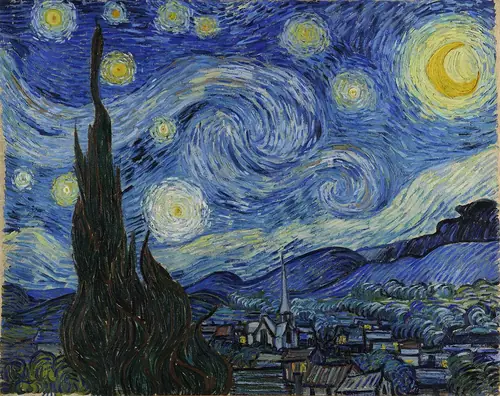
- The Starry Night Vincent van GoghAlso by Vincent van Gogh
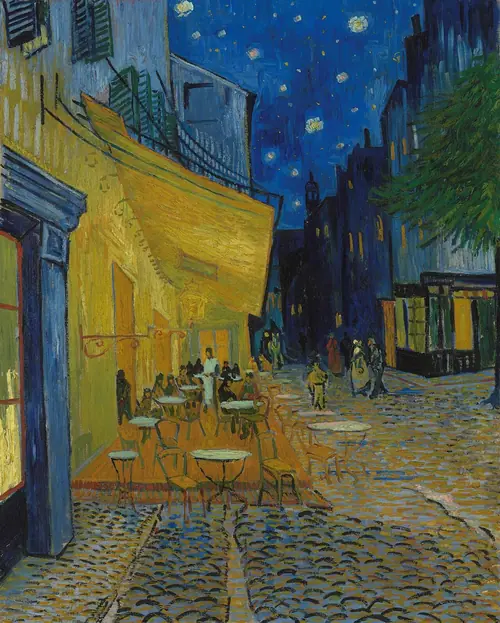
- Café Terrace at Night Vincent van GoghAlso by Vincent van Gogh
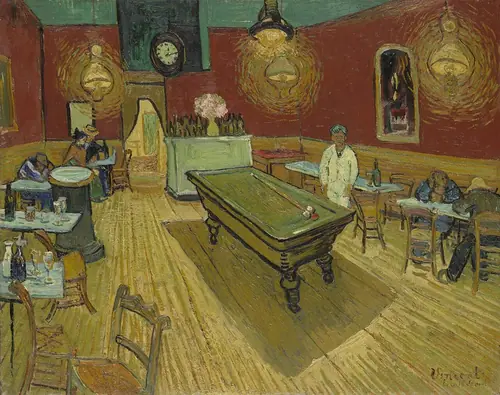
- The Night Café Vincent van GoghAlso by Vincent van Gogh
What do you see?
Stand in front of it for a moment. Then tell us what you noticed or felt - there are no wrong answers.
Be the first to share a thought.
More by Vincent van Gogh
If you like this, stand in front of these