Inside the Canvas
Tip: move over the painting to use the lens.
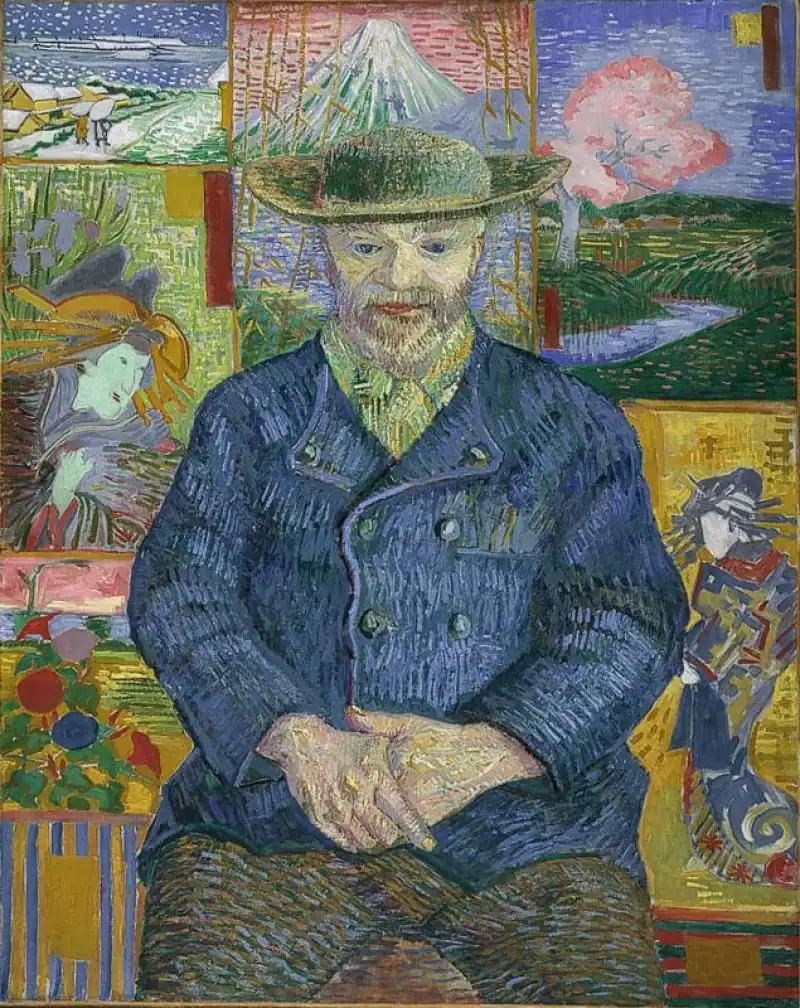
Portrait of Père Tanguy
Vincent van Gogh · 1887
Who is the quiet soul in this portrait, really looking at us?
- Artist
- Vincent van Gogh
- Date
- 1887
- Where to see it
- Musée Rodin
Musée Rodin · Public domain · image via Wikimedia Commons · see it at the museum ↗
Updated 24 October 2026 · how we write
The story
Vincent van Gogh's Portrait of Père Tanguy, a serene and contemplative painting from 1887, marks a turning point in his artistic style after moving to Paris. This work is one of three portraits of Julien Tanguy, showcasing van Gogh's growing confidence and experimentation with color. The painting's simplicity and gentle tone reflect the artist's quest for inner peace. This masterpiece is now housed in the Musée Rodin, Paris.
Despite struggling with mental illness and poverty, he produced over 2,100 works in just a decade, including 860 oil paintings that are characterised by bold colours and expressive brushwork. His tragic death at 37 has become a testament to his enduring legacy.
This period saw the artist's creative output increase dramatically, with many masterpieces emerging during this time.
Our perspective
Our own reading of the picture - an opinion, not a fact.
Standing before this portrait, I'm struck by the quiet intensity of Père Tanguy's gaze. It's as if he's absorbed the world around him, leaving him with a sense of inner calm. This painting asks us to pause and reflect on our own moments of contemplation. Can we find a similar sense of serenity in our busy lives?
The more I look at this painting, the more I see echoes of my own experiences. The gentle colors and soothing atmosphere evoke a sense of nostalgia, reminding me of quiet moments with loved ones. This portrait invites me to slow down and appreciate the beauty in stillness.
Slow Look
- Père Tanguy's eyes Notice the way his gaze seems to draw you in, inviting you to share in his contemplative mood.
- The background Observe how the soft, muted colors of the background subtly enhance the subject's serene atmosphere.
- The brushstrokes Feel the textured, expressive brushwork that adds depth and emotion to the portrait.
- Père Tanguy's hands Notice how the artist has captured the subtle tension in the subject's hands, adding a sense of quiet anxiety to the overall mood.
- The edges Look at the soft, blurred edges of the painting, which create a sense of softness and gentleness.
About Vincent van Gogh
Vincent van Gogh (1853-1890) painted for only about ten years, yet left around 2,100 works, some 860 of them oil paintings. Born in the Netherlands, he moved to Paris and then to Arles and Saint-Remy in the south of France, where most of his best-known pictures were made. His thick, swirling brushstrokes and strong, bright colour turned feeling into paint. He sold very few works in his lifetime and relied on his brother Theo, but he later became one of the painters who shaped modern art.
Questions about Portrait of Père Tanguy
What should I know about Portrait of Père Tanguy?
Vincent van Gogh's Portrait of Père Tanguy, a serene and contemplative painting from 1887, marks a turning point in his artistic style after moving to Paris. This work is one of three portraits of Julien Tanguy, showcasing van Gogh's growing confidence and experimentation with color. The painting's simplicity and gentle tone reflect the artist's quest for inner peace.
Who is the artist of Portrait of Père Tanguy?
The artist of Portrait of Père Tanguy is Vincent van Gogh.
When did Vincent van Gogh make Portrait of Père Tanguy?
The museum record dates Portrait of Père Tanguy to 1887.
Where is Portrait of Père Tanguy today?
It is in the collection of Musée Rodin.
What characterizes Vincent van Gogh's oil paintings, such as Portrait of Père Tanguy?
Vincent van Gogh's oil paintings, such as Portrait of Père Tanguy, are characterized by bold colours and expressive brushwork.
Keep reading
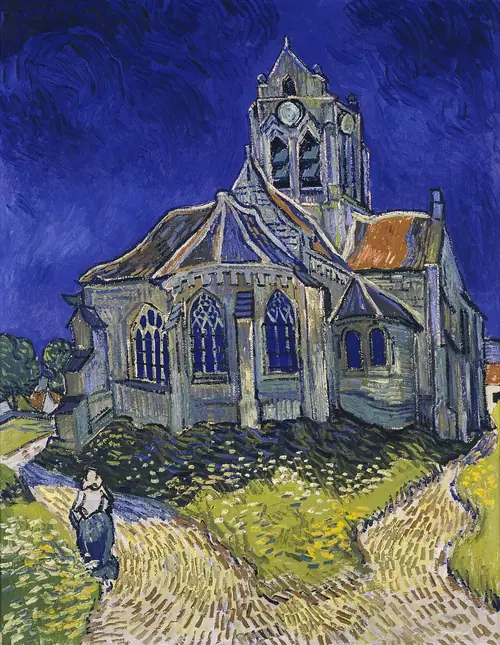
- The Church at Auvers Vincent van GoghAlso by Vincent van Gogh
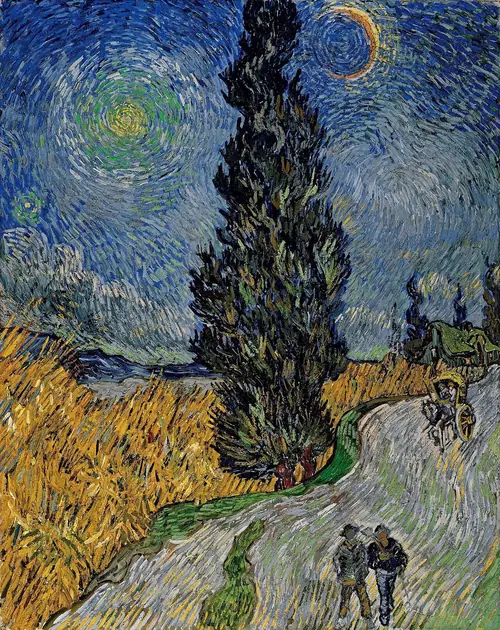
- Road with Cypress and Star Vincent van GoghAlso by Vincent van Gogh
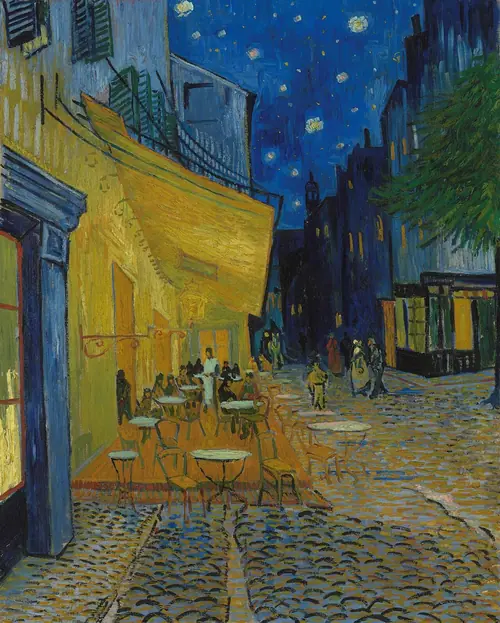
- Café Terrace at Night Vincent van GoghAlso by Vincent van Gogh
What do you see?
Stand in front of it for a moment. Then tell us what you noticed or felt - there are no wrong answers.
Be the first to share a thought.
More by Vincent van Gogh
If you like this, stand in front of these