Tip: move over the painting to use the lens.
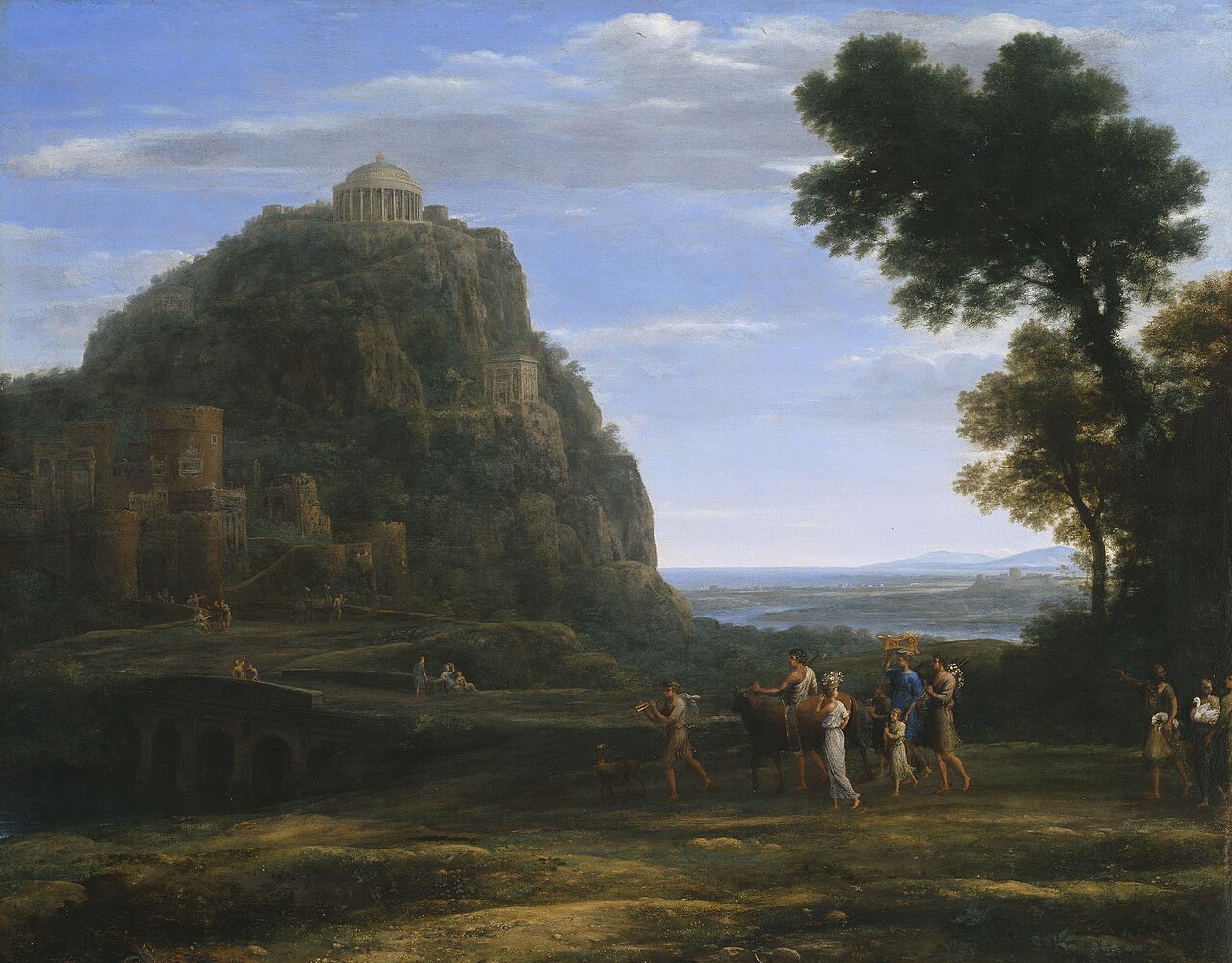
View of Delphi with a Procession
Claude Lorrain · 1673
- Artist
- Claude Lorrain (Claude Gellée; French, 1600-1682)
- Date
- 1673
- Medium
- Oil on canvas
- Size
- 101.6 × 127 cm (40 × 50 in.); Framed: 130.2 × 156.6 cm (51 1/4 × 61 5/8 in.)
- Made in
- France
- Style
- Realism
- Where to see it
- Art Institute of Chicago
Robert A. Waller Memorial Fund · CC0 Public Domain · Art Institute of Chicago · image via Wikimedia Commons · see it at the museum ↗
Notes from the museum
This painting of the ancient city of Delphi (in what is now Greece) presents a delicate rendering of the glowing Mediterranean atmosphere. Like many other foreign artists drawn to the ruins of antiquity, French painter Claude Lorrain was fascinated with the ancient Roman Empire. Here, he evoked a serene, bucolic world akin to the poetic vision of the ancient Roman writer Virgil, depicting the ruins restored to their original glory as Claude imagined. This painting was commissioned by Cardinal Carlo Camillo Massimi, an important and erudite collector in Rome.
Text: Art Institute of Chicago (open access). Our full story for this work is coming soon.
Slow Look
- The whole picture Let your eyes wander. Where do they want to rest?
- The light Find the brightest spot. What is it showing you?
- The edges Look at what is half cut off at the borders.
- One small detail Choose one tiny thing and stay with it for a while.
- The whole picture again Step back. Has it changed for you?
About Claude Lorrain
Claude Lorrain was a painter, draughtsman and etcher of the Baroque era originally from the Duchy of Lorraine. He spent most of his life in Italy, and is one of the earliest significant artists, aside from his contemporaries in Dutch Golden Age painting, to concentrate on landscape painting. His landscapes often transitioned into the more prestigious genre of history paintings by addition of a few small figures, typically representing a scene from the Bible or classical mythology.
What do you see?
Stand in front of it for a moment. Then tell us what you noticed or felt - there are no wrong answers.
Be the first to share a thought.
If you like this, stand in front of these