Tip: move over the painting to use the lens.
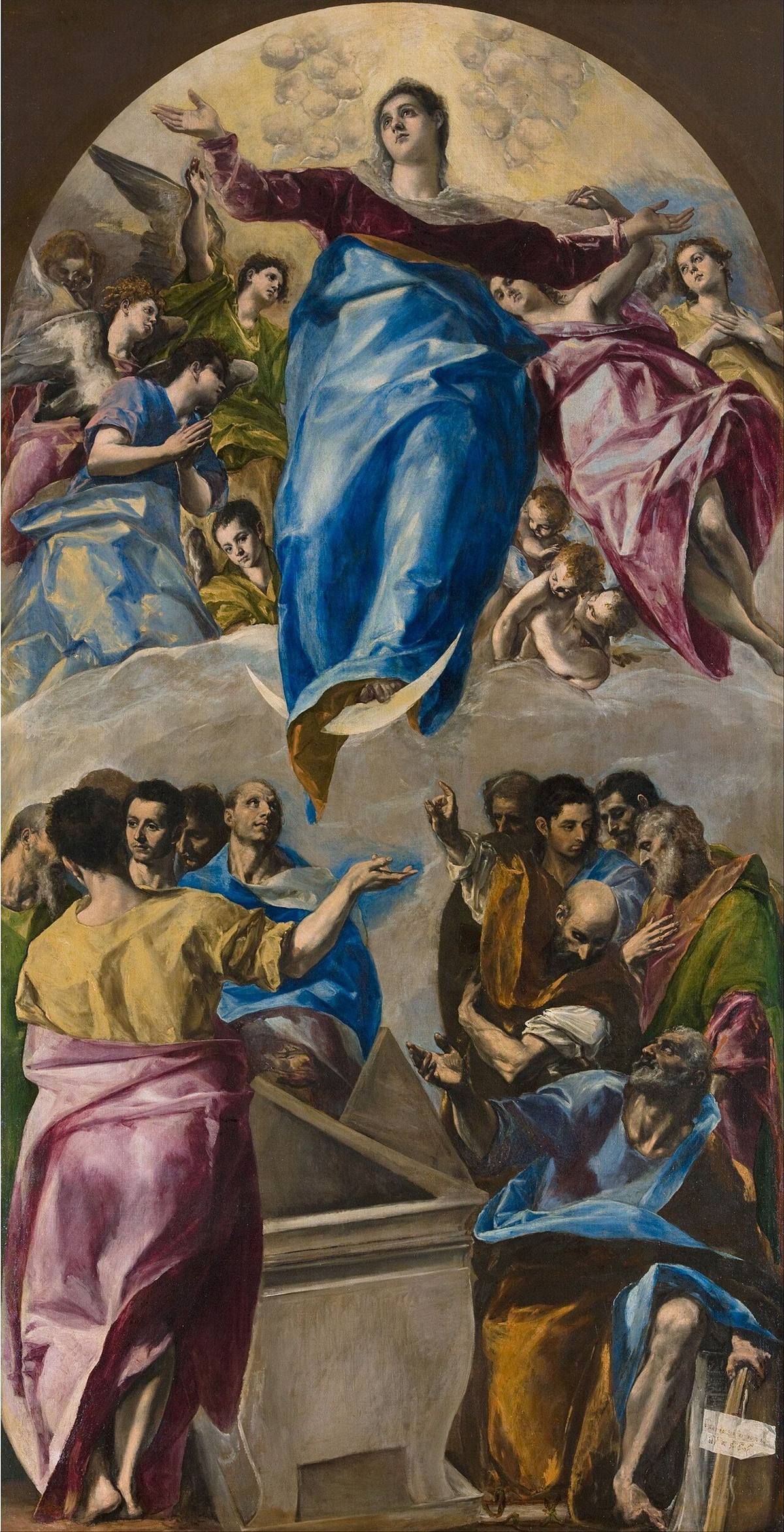
The Assumption of the Virgin
Domenico Theotokópoulos, called El Greco · 1577–79
- Artist
- El Greco (Doménikos Theotokópoulos; Greek, active in Spain, 1541–1614)
- Date
- 1577–79
- Medium
- Oil on canvas
- Size
- 403.2 × 211.8 cm (158 3/4 × 83 7/16 in.); Framed: 461.6 × 256.5 × 14 cm (181 3/4 × 101 × 5 9/16 in.)
- Made in
- Greece
- Style
- Mannerism
- Where to see it
- Art Institute of Chicago
Gift of Nancy Atwood Sprague in memory of Albert Arnold Sprague · CC0 Public Domain · Art Institute of Chicago · image via Wikimedia Commons · see it at the museum ↗
Notes from the museum
The Assumption of the Virgin was the central image of El Greco’s first major commission, an altarpiece for the Church of Santo Domingo el Antiguo, a convent in Toledo, Spain. The painting’s subject, the raising of the Virgin Mary’s body into heaven, relates to the function of the church as the funerary monument of a wealthy noblewoman, Doña Maria de Silva; the iconography of the entire commission focuses on death and salvation. El Greco used broad, free brushwork, flickering hues, rich color harmonies, and bold figural arrangements to arouse devotional fervor in the viewer and impart a deep sense of faith. The composition is divided into two zones: the earthly sphere of the apostles and the celestial realm of the angels. El Greco masterfully compressed many figures into a tall and narrow format: In the earthly zone, the apostles’ faces and gestures express a range of emotions through their dynamic, agitated gestures and poses. They are so individually considered that it seems El Greco studied actual studio models. In contrast, the angels in the heavenly scene above are calm, graceful, and direct in their focus toward the looming figure of the Virgin Mary as she rises into their realm.
Text: Art Institute of Chicago (open access). Our full story for this work is coming soon.
Slow Look
- The whole picture Let your eyes wander. Where do they want to rest?
- The light Find the brightest spot. What is it showing you?
- The edges Look at what is half cut off at the borders.
- One small detail Choose one tiny thing and stay with it for a while.
- The whole picture again Step back. Has it changed for you?
What do you see?
Stand in front of it for a moment. Then tell us what you noticed or felt - there are no wrong answers.
Be the first to share a thought.
More by Domenico Theotokópoulos, called El Greco
If you like this, stand in front of these