Inside the Canvas
Tip: move over the painting to use the lens.
Portinari Altarpiece
Hugo van der Goes · 1475
Uncover the secrets of a 15th-century masterpiece
- Artist
- Hugo van der Goes
- Date
- 1475
- Where to see it
- Uffizi Gallery
Uffizi Gallery · Public domain · image via Wikimedia Commons · see it at the museum ↗
Updated 27 October 2026 · how we write
The story
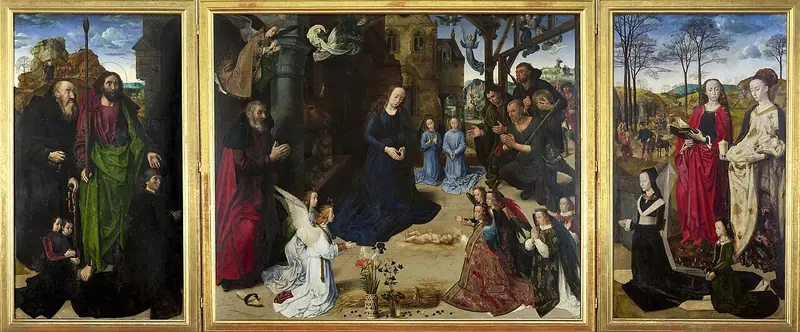
Hugo van der Goes, a renowned Flemish painter, created the Portinari Altarpiece in 1475. This stunning oil-on-wood triptych represents the Adoration of the Shepherds, a biblical scene. The artwork measures 253 x 304 cm, making it a truly monumental piece.
The Portinari Altarpiece was commissioned by Tommaso Portinari, a wealthy merchant, and is now housed in the Uffizi Gallery in Florence, Italy. This masterpiece has played a significant role in the development of Italian Renaissance art.
The altarpiece is a testament to van der Goes' innovative style, which blended realism with a unique color palette. His monumental approach to painting had a lasting impact on the art world.
Our perspective
Our own reading of the picture - an opinion, not a fact.
As you stand before the Portinari Altarpiece, you're transported to a serene winter scene. The soft, golden light illuminates the humble shepherds, their faces aglow with devotion. It's a reminder to slow down and appreciate the simple beauty in life.
The artwork asks us to reflect on the true meaning of adoration. Are we truly present in the moments that matter, or are we distracted by the world around us? The Portinari Altarpiece invites us to ponder these questions and find inner peace.
Slow Look
- the shepherds' gentle faces the warmth and tenderness of their expressions
- the starry night sky the soft, shimmering light that fills the scene
- the humble clothing of the shepherds the simplicity and humility of their attire
- the Adoration scene itself the quiet reverence of the shepherds as they worship
- the artist's signature the subtle yet elegant signature of Hugo van der Goes, a testament to his mastery of the craft
About Hugo van der Goes
Hugo van der Goes was a Flemish painter who was one of the most significant and original Early Netherlandish painters of the late 15th century. Van der Goes was an important painter of altarpieces as well as portraits. He introduced important innovations in painting through his monumental style, use of a specific colour range and individualistic manner of portraiture. From 1483 onwards, the presence of his masterpiece, the Portinari Triptych, in Florence played a role in the development of realism and the use of colour in Italian Renaissance art.
Text adapted from Wikipedia, Hugo van der Goes, licensed CC BY-SA 4.0.
Questions about Portinari Altarpiece
What should I know about Portinari Altarpiece?
Hugo van der Goes, a renowned Flemish painter, created the Portinari Altarpiece in 1475. This stunning oil-on-wood triptych represents the Adoration of the Shepherds, a biblical scene. The artwork measures 253 x 304 cm, making it a truly monumental piece.
Who is the artist of Portinari Altarpiece?
The artist of Portinari Altarpiece is Hugo van der Goes.
When did Hugo van der Goes make Portinari Altarpiece?
Hugo van der Goes's Portinari Altarpiece is dated 1475 in the museum record.
Where can I see Portinari Altarpiece?
It is in the collection of Uffizi Gallery.
What style does Hugo van der Goes' painting in the Portinari Altarpiece represent?
The Portinari Altarpiece represents a monumental style, blending realism with a unique color palette.
What style of painting is the Portinari Altarpiece an example of?
The Portinari Altarpiece is an example of Early Netherlandish painting.
Keep reading
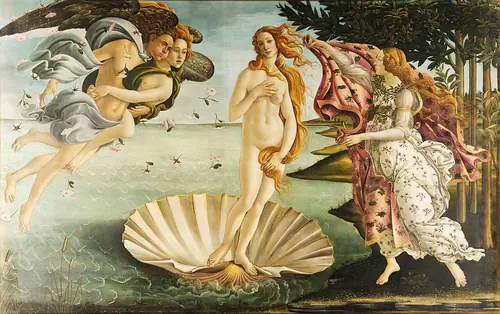
- The Birth of Venus Sandro BotticelliAlso at Uffizi Gallery
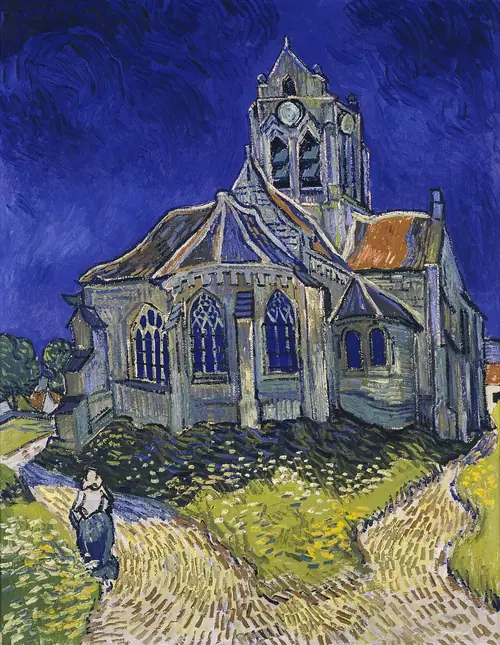
- The Church at Auvers Vincent van GoghShared themes: contemplative, peaceful, serene
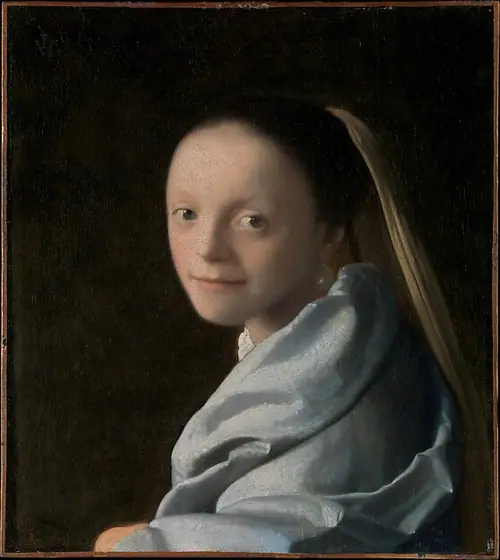
- Study of a Young Woman Johannes VermeerShared themes: contemplative, peaceful, serene
What do you see?
Stand in front of it for a moment. Then tell us what you noticed or felt - there are no wrong answers.
Be the first to share a thought.
If you like this, stand in front of these