Inside the Canvas
Tip: move over the painting to use the lens.
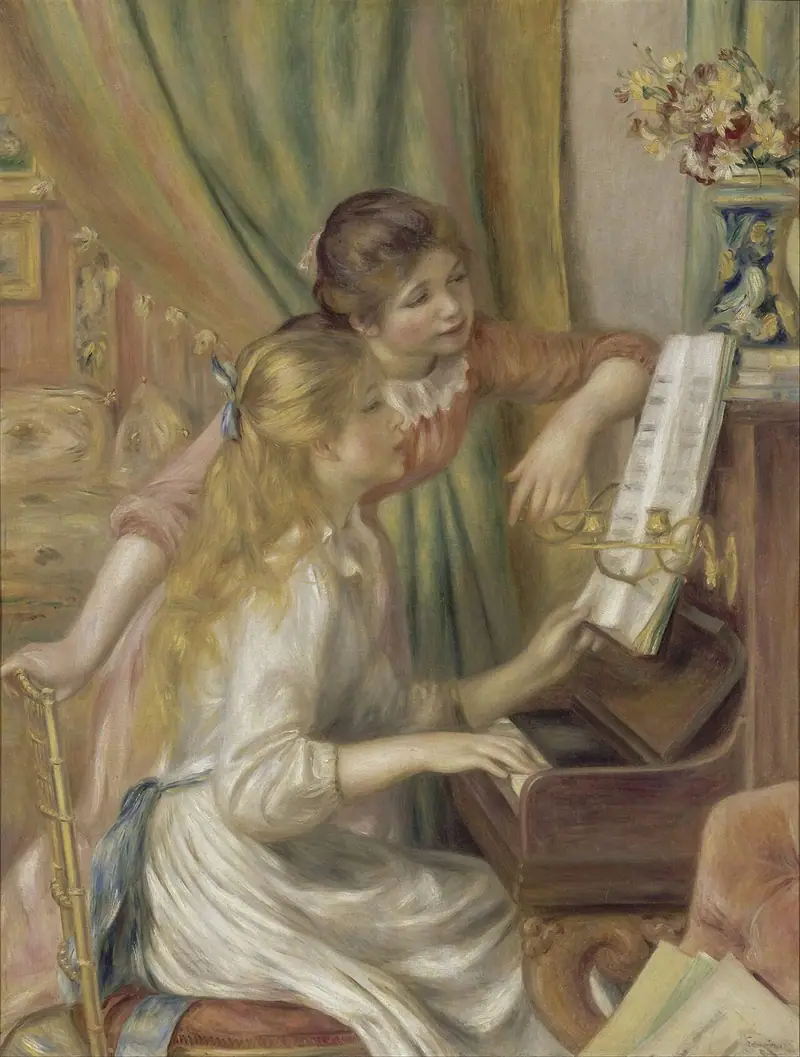
Girls at the Piano
Pierre-Auguste Renoir · 1892
A piano serenade - what secrets are these young friends sharing?
- Artist
- Pierre-Auguste Renoir
- Date
- 1892
- Where to see it
- Musée d'Orsay
Musée d'Orsay · Public domain · image via Wikimedia Commons · see it at the museum ↗
Updated 18 October 2026 · how we write
The story
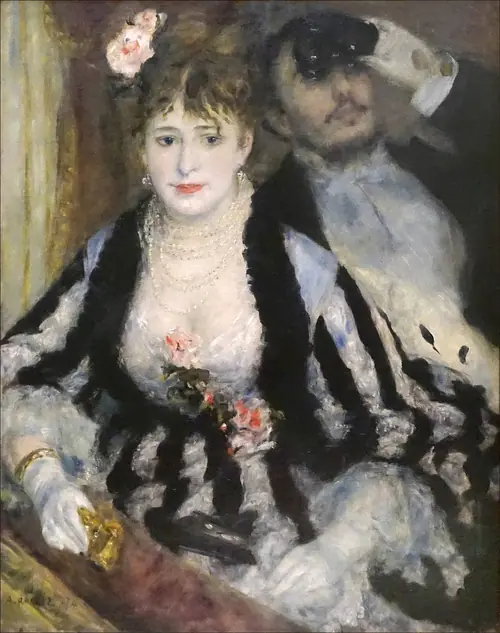
In 1892, French Impressionist master Pierre-Auguste Renoir painted this delightful scene of three young girls gathered around a piano. The informal commission was for the Musée du Luxembourg, and Renoir would go on to create multiple variations of this piece. This oil-on-canvas work is now part of the Musée d'Orsay's collection in Paris.
The painting is a representation of Renoir's late work period, a time marked by a focus on feminine beauty and everyday life. Renoir's brushstrokes are characteristic of the Impressionist style, capturing the soft play of light and the gentle curves of the girls' bodies.
The Musée d'Orsay, Metropolitan Museum of Art, and Musée de l'Orangerie also hold versions of this painting, demonstrating Renoir's prolific output and the demand for his work.
Our perspective
Our own reading of the picture - an opinion, not a fact.
As you stand before this painting, you can't help but feel a sense of warmth and intimacy. It's as if you've stumbled upon a private moment, one that's meant to be shared only among friends. Renoir's use of color and light creates a cozy atmosphere, drawing you in with its inviting quality. This painting asks us to slow down and appreciate the simple joys in life, like the quiet camaraderie of three young friends sharing a moment around the piano.
Slow Look
- the girls' hands Notice how their hands seem to be moving in tandem, as if they're sharing a secret or planning a surprise.
- the piano keys Take a closer look at the piano keys - are they being played or simply contemplated? The stillness of the scene belies the potential for music to fill the air.
- the girls' faces Study the girls' faces - do they seem lost in thought or conspiring together? The soft focus on their features invites you to imagine their inner lives.
- the color palette Look at the vibrant colors Renoir used to bring this scene to life. The soft pinks and blues create a sense of calm, while the warm tones of the piano and the girls' skin add a sense of comfort.
- the background Notice the subtle background details - the faint outline of a room, the soft texture of the wallpaper. These details add depth and context to the scene, making it feel more like a real moment in time.
About Pierre-Auguste Renoir
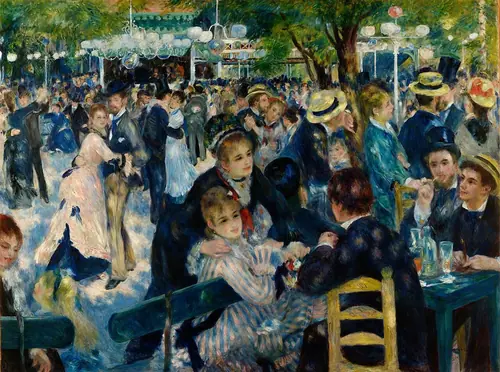
Pierre-Auguste Renoir (1841-1919) began as a teenage painter of porcelain in Paris before training as an artist. With his friend Claude Monet he helped create Impressionism, painting side by side at La Grenouillere in 1869. He loved people, light and pleasure: his Bal du moulin de la Galette (1876) and Luncheon of the Boating Party (1880-81) capture Parisians dancing, talking and eating in dappled sunlight. In old age, despite severe arthritis, he kept painting soft, warm figures and flowers until his death in 1919.
Questions about Girls at the Piano
What is the story behind Girls at the Piano?
In 1892, French Impressionist master Pierre-Auguste Renoir painted this delightful scene of three young girls gathered around a piano. The informal commission was for the Musée du Luxembourg, and Renoir would go on to create multiple variations of this piece. This oil-on-canvas work is now part of the Musée d'Orsay's collection in Paris.
Who painted Girls at the Piano?
Pierre-Auguste Renoir painted Girls at the Piano.
What is the date of Girls at the Piano?
The museum record dates Girls at the Piano to 1892.
Where is Girls at the Piano today?
It is in the collection of Musée d'Orsay.
Why is the scene of Girls at the Piano by Pierre-Auguste Renoir a representation of Renoir's late work period?
The scene represents Renoir's late work period because it focuses on feminine beauty and everyday life.
Keep reading
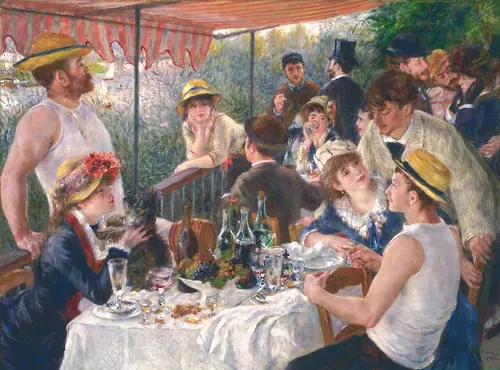
- Luncheon of the Boating Party Pierre-Auguste RenoirAlso by Pierre-Auguste Renoir
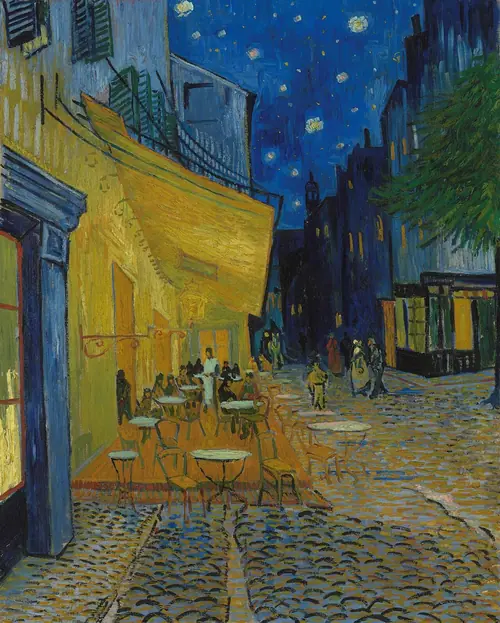
- Café Terrace at Night Vincent van GoghShared themes: intimate, warm
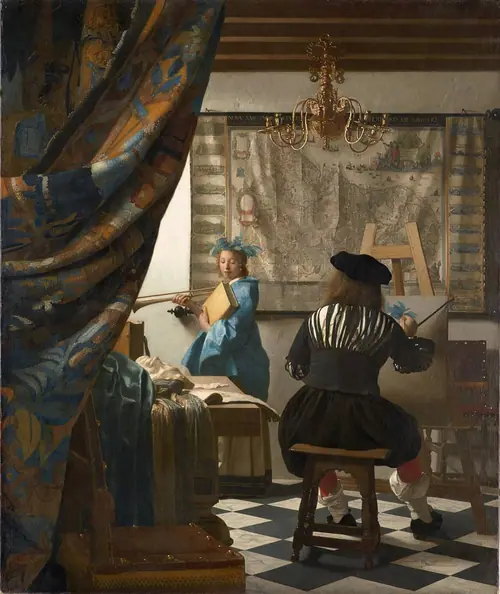
- The Art of Painting Johannes VermeerShared themes: intimate, whimsical
What do you see?
Stand in front of it for a moment. Then tell us what you noticed or felt - there are no wrong answers.
Be the first to share a thought.
More by Pierre-Auguste Renoir
If you like this, stand in front of these